



When You Need a Concrete Slab
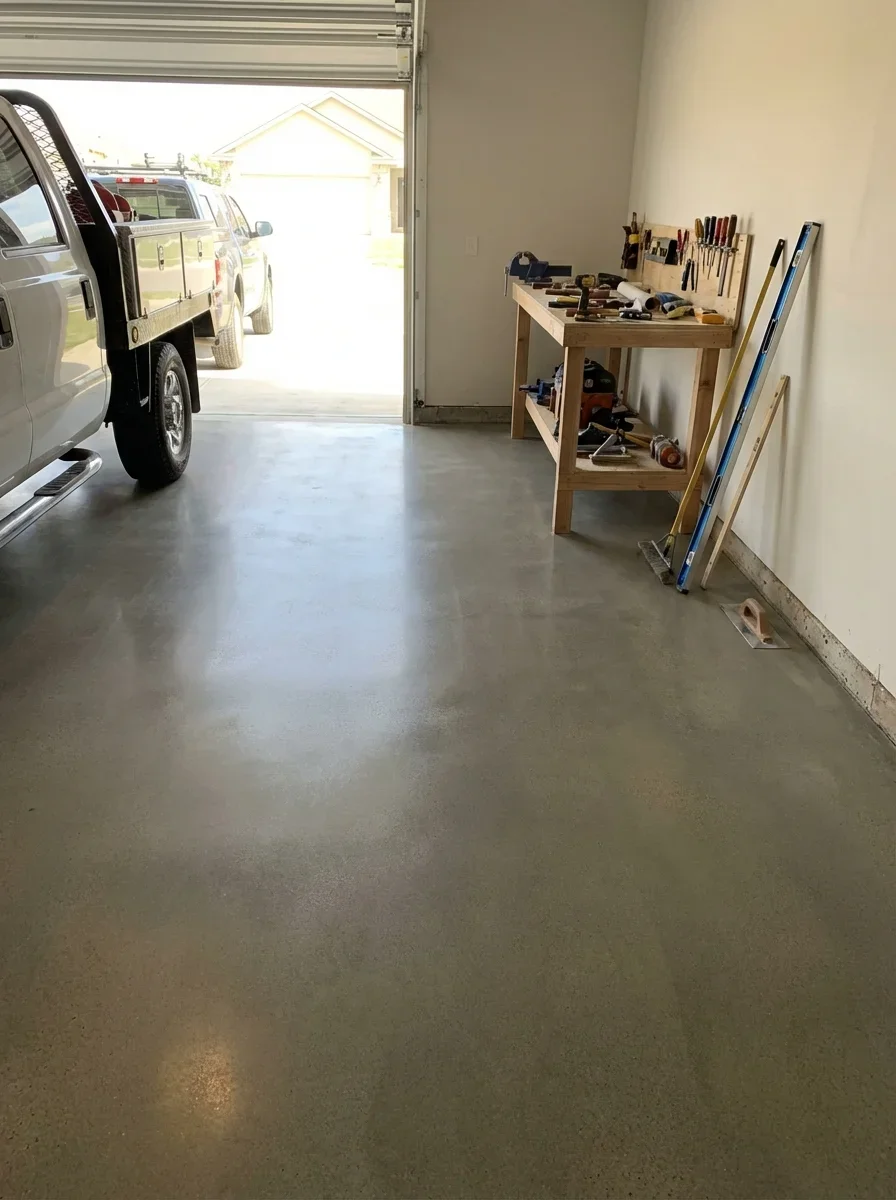
You're ready to build that garage in Madison or finally put up the pole barn. But pouring concrete isn't something you can redo easily. The slab determines whether your structure lasts 50 years or starts cracking in five.
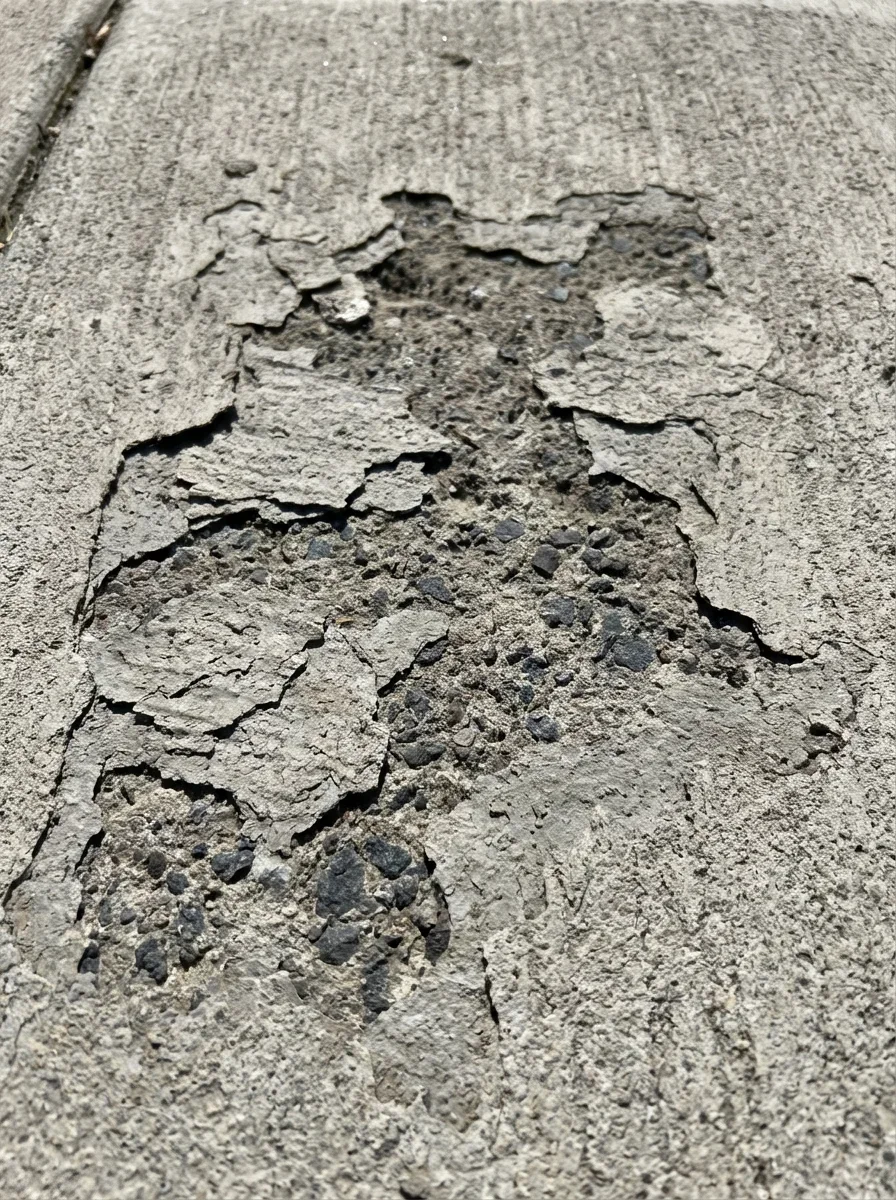
Thickness matters more than you think. A 4" slab works fine for a garden shed storing lawn equipment. Put a pickup truck on it and you'll see spiderweb cracks within two seasons. Park a boat trailer or workshop equipment on inadequate concrete and the damage accelerates.
Wisconsin's freeze-thaw cycle punishes shortcuts. Spring thaw lifts improperly prepared slabs. Water pooling under thin concrete freezes, expands, and creates voids. By summer you're looking at settled corners and cracked edges.
You need to know three things before you pour: what thickness your use requires, what reinforcement the load demands, and whether your contractor understands Wisconsin frost depth requirements.
The wrong thickness costs thousands to fix. Tearing out and replacing a garage slab runs $8,000-$15,000. Getting it right the first time costs a fraction of that.
Most contractors in Milwaukee and Green Bay know the basics. The good ones ask about vehicle weight, equipment loads, and long-term plans before recommending thickness.
What Does a Concrete Slab Cost in Wisconsin?
The question everyone asks first. Cost breaks down by thickness, size, and site conditions — but typical residential slabs fall into predictable ranges.
Pricing by Slab Type and Thickness
| Slab Type | Thickness | Typical Cost Range |
|---|---|---|
| Shed/light storage | 4" with wire mesh | $6-$8/sqft |
| Single garage | 6" with rebar | $8-$11/sqft |
| Double garage/shop | 6" with rebar | $8-$11/sqft |
| Heavy equipment/commercial | 8" with enhanced rebar | $12-$16/sqft |
A 24×24 garage slab (576 sqft) at 6" thickness runs $4,600-$6,300 installed in the Milwaukee area. That includes excavation, gravel base, rebar, pour, and basic broom finish.
Square footage affects per-foot pricing. Small slabs (under 300 sqft) often cost $2-$3 more per square foot because mobilization and setup time stays constant. An 800-1,200 sqft pole barn slab gets better efficiency pricing.
Site Prep and Material Costs
Your location adds variables. Flat, accessible lots in Madison cost less than sloped sites requiring retaining wall work. Tight backyard access that prevents concrete truck proximity means pump truck fees: $600-$900 extra.
Rock or clay subgrade requires more excavation labor. Sandy soil drains well but may need geotextile fabric under the gravel ($0.40-$0.60/sqft).
| Cost Factor | Impact |
|---|---|
| Difficult access (pump needed) | +$600-$900 flat fee |
| Sloped site (extra grading) | +$1.50-$3.00/sqft |
| Thicker edges (turned-down slab) | +$2-$4/linear foot |
| Vapor barrier (for heated spaces) | +$0.50-$0.80/sqft |
| Decorative finish (exposed aggregate) | +$3-$6/sqft |
Timing affects cost too. Spring and fall book solid in Wisconsin. Mid-summer or early winter (before ground freeze) may get you 10-15% discounts as crews fill schedules.
Most contractors require 30-50% deposit, balance on completion. Permits run $100-$300 depending on municipality — Green Bay and Appleton have different requirements for accessory structures.
How Concrete Slab Installation Works
Site prep determines slab longevity. Everything that happens before the truck arrives matters more than the pour itself.
Site Preparation and Excavation
The crew excavates 10-14" below final grade — deeper than most homeowners expect. Wisconsin's 48" frost line doesn't directly affect slabs (they're not footings), but the base needs to extend below topsoil into stable subgrade.
They remove organic material completely. Tree roots, sod, and topsoil compress over time. A 30×40 garage slab sitting on poor soil will settle unevenly within three years.
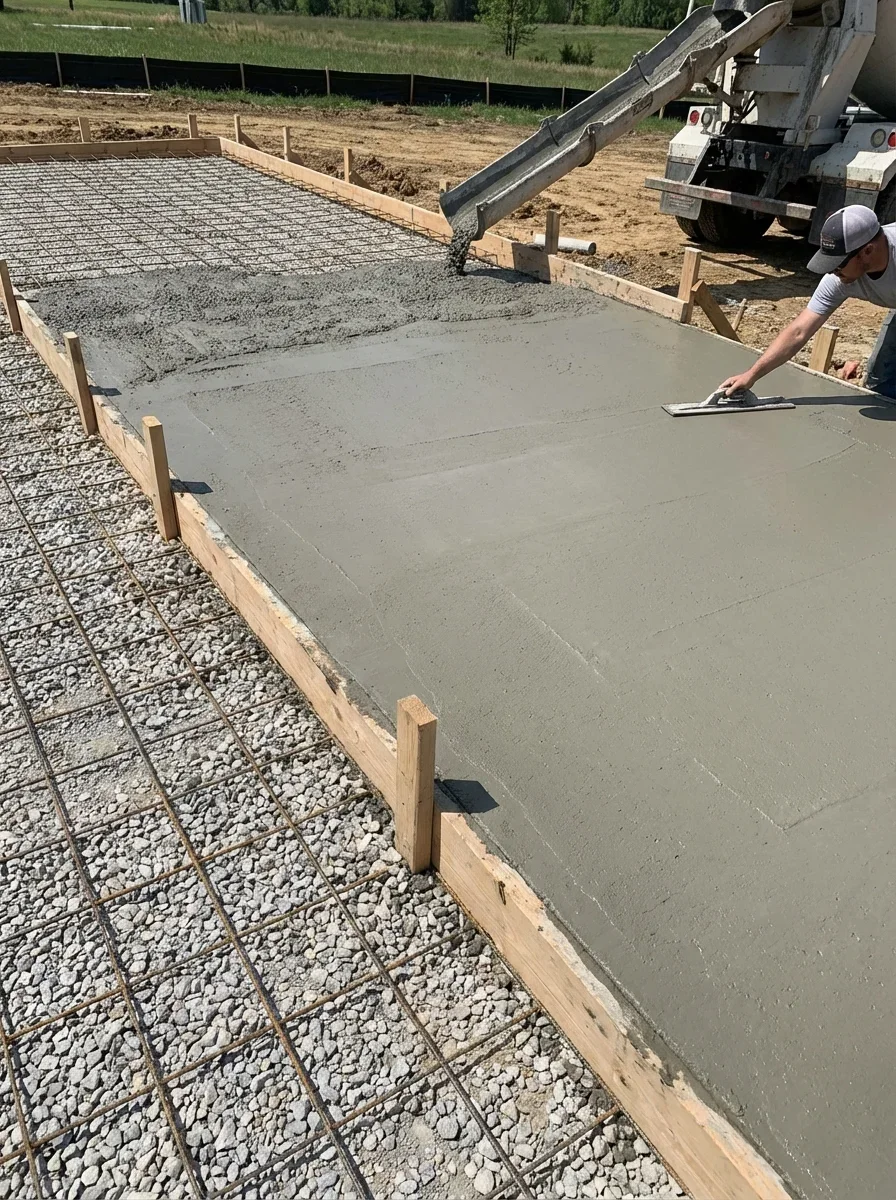
Next comes 4-6" of compacted crushed limestone. This layer does two things: provides stable support and allows drainage away from the slab bottom. Without proper compaction, the gravel shifts and the concrete follows.
Forms, Reinforcement, and Pour
2×8 or 2×10 lumber forms create the slab perimeter. The contractor sets these level and braced — concrete exerts serious sideways pressure during the pour.
| Reinforcement Type | Use Case | Cost Addition |
|---|---|---|
| Wire mesh (6×6 10/10) | Light residential, sheds | +$0.30-$0.50/sqft |
| Rebar (#4 @ 18" grid) | Garage slabs, vehicle loads | +$0.75-$1.25/sqft |
| Fiber mesh additive | Crack control, light duty | +$0.20-$0.35/sqft |
For a garage or shop in Appleton, rebar is standard. The grid sits on chairs that hold it in the lower third of the slab — that's where tensile strength matters most.
The concrete truck arrives early morning in summer. You want 3,000-4,000 PSI mix for residential slabs. Higher PSI costs more but provides minimal benefit for typical garage use.
The crew pours, screeds level, and bull-floats the surface. For a broom finish (garage standard), they drag a stiff broom across once the bleed water disappears. This creates traction without being rough.
Finishing and Curing
Control joints get cut within 24 hours — shallow grooves that tell the concrete where to crack as it shrinks. Spacing should be 2-3 times the slab thickness in feet: 8-12' spacing for a 4" slab, 12-18' for 6".
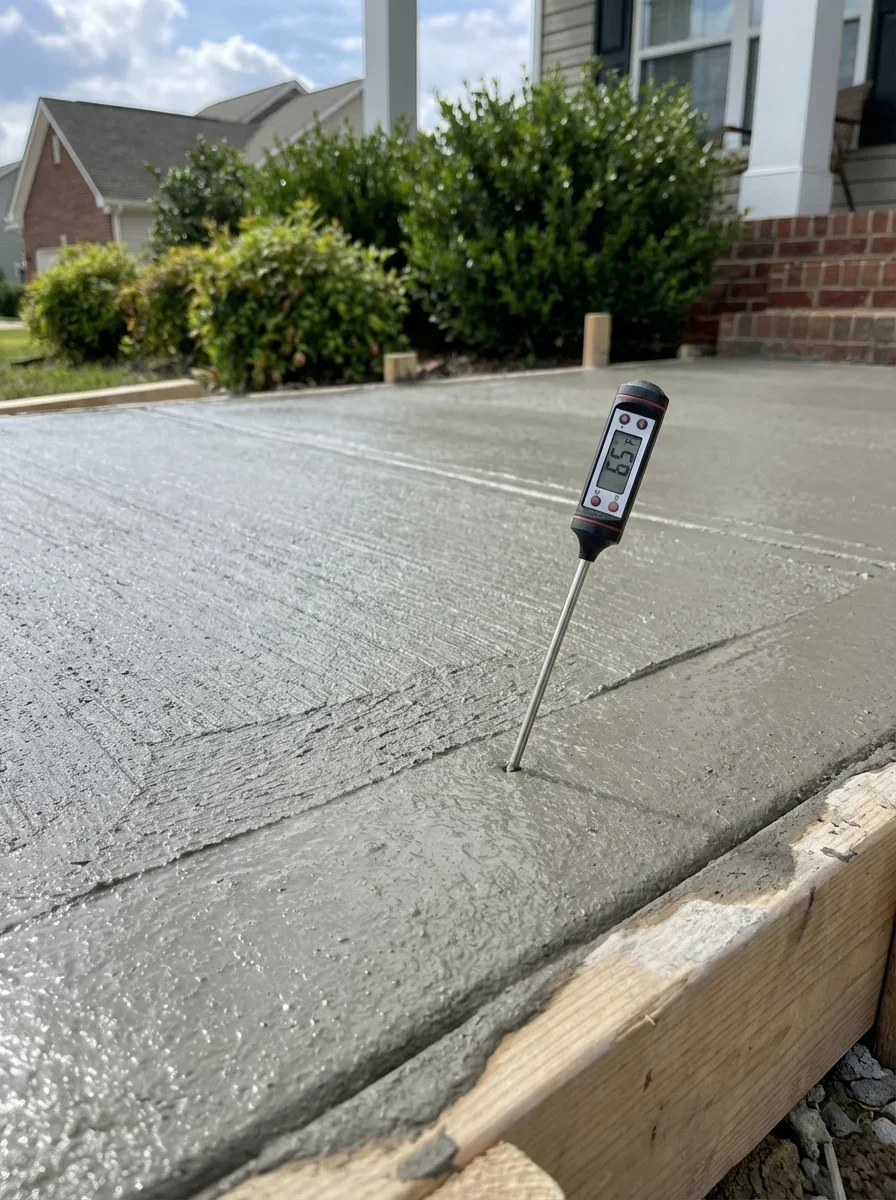
The 7-day cure matters. Concrete reaches 70% strength in seven days, full strength in 28. Keep the slab damp (not wet) during hot weather. In Oshkosh's summer heat, covering with plastic sheeting prevents rapid moisture loss that causes surface cracking.
No vehicle traffic until day seven minimum. You can walk on it after 24-48 hours.
How to Choose a Concrete Slab Contractor
The lowest bid often costs the most. Concrete work separates experienced contractors from those who just rent equipment.
Questions to Ask Before Hiring
What thickness do you recommend for my use case and why? Good contractors ask about vehicle weight, equipment loads, and future plans. Cookie-cutter "all slabs are 4 inches" answers signal inexperience.
How deep is your gravel base and what's your compaction method? You want 4-6" minimum, compacted in lifts with a plate compactor or roller. "We eyeball it" isn't acceptable.
What PSI concrete mix do you specify? 3,000-4,000 PSI is standard residential. Lower than 3,000 raises durability questions.
Where does reinforcement sit in the slab? Wire mesh or rebar should be in the lower third (on chairs), not lying on the gravel. Reinforcement on the bottom does nothing.
How do you handle curing in hot or cold weather? Summer pours need moisture retention. Cold weather (below 40°F) requires heated enclosures or blankets. "We pour year-round no problem" is a red flag.
Licensing and Insurance Requirements
Wisconsin doesn't require state licensing for concrete contractors, but your municipality may. Most cities require building permits for slabs over 200 sqft or attached to structures.
Verify general liability insurance ($1M minimum) and workers compensation if they have employees. Request certificates — don't take their word.
Red Flags
- Verbal-only estimates without scope details in writing
- No references from local garage or shop projects in the past two years
- Pressure to skip permits or claim they're unnecessary
- Unwillingness to specify concrete PSI, rebar spacing, or base depth in the contract
Check for warranty terms. Reputable contractors warranty their work for 1-3 years against defects in workmanship (not natural cracking from settling or freeze-thaw). Material failures fall to the concrete supplier.
Compare at least three detailed bids. The contractor who asks the most questions about your plans usually delivers the best outcome. A slab lasts 30-50 years — choose based on expertise, not just price.
Frequently Asked Questions
Yes, a gravel base (typically 4-6 inches) is essential under concrete slabs. It provides drainage, stabilizes soil, prevents erosion, and distributes weight evenly to prevent cracking.