



When Should You Install or Replace a Sidewalk?
You're looking at sidewalk work for one of three reasons: you're building new construction, your existing walk is crumbling, or the city issued a repair notice. Each scenario has different requirements.
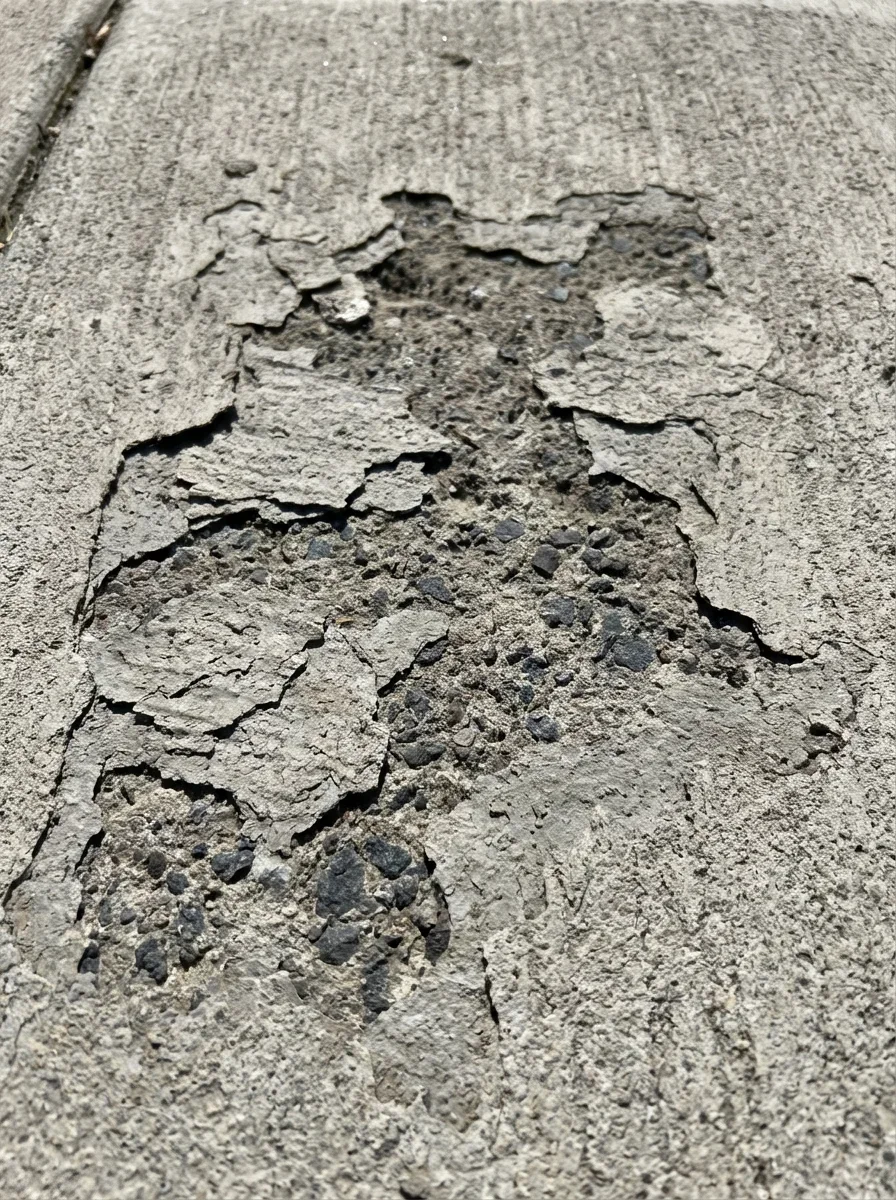
Replacement triggers include cracks wider than 1/4 inch, uneven sections creating trip hazards over 1/2 inch high, spalling (surface flaking) that exposes aggregate, or standing water from improper slope. In Milwaukee and Madison, municipalities actively enforce sidewalk safety ordinances—property owners receive violation notices for hazardous conditions.
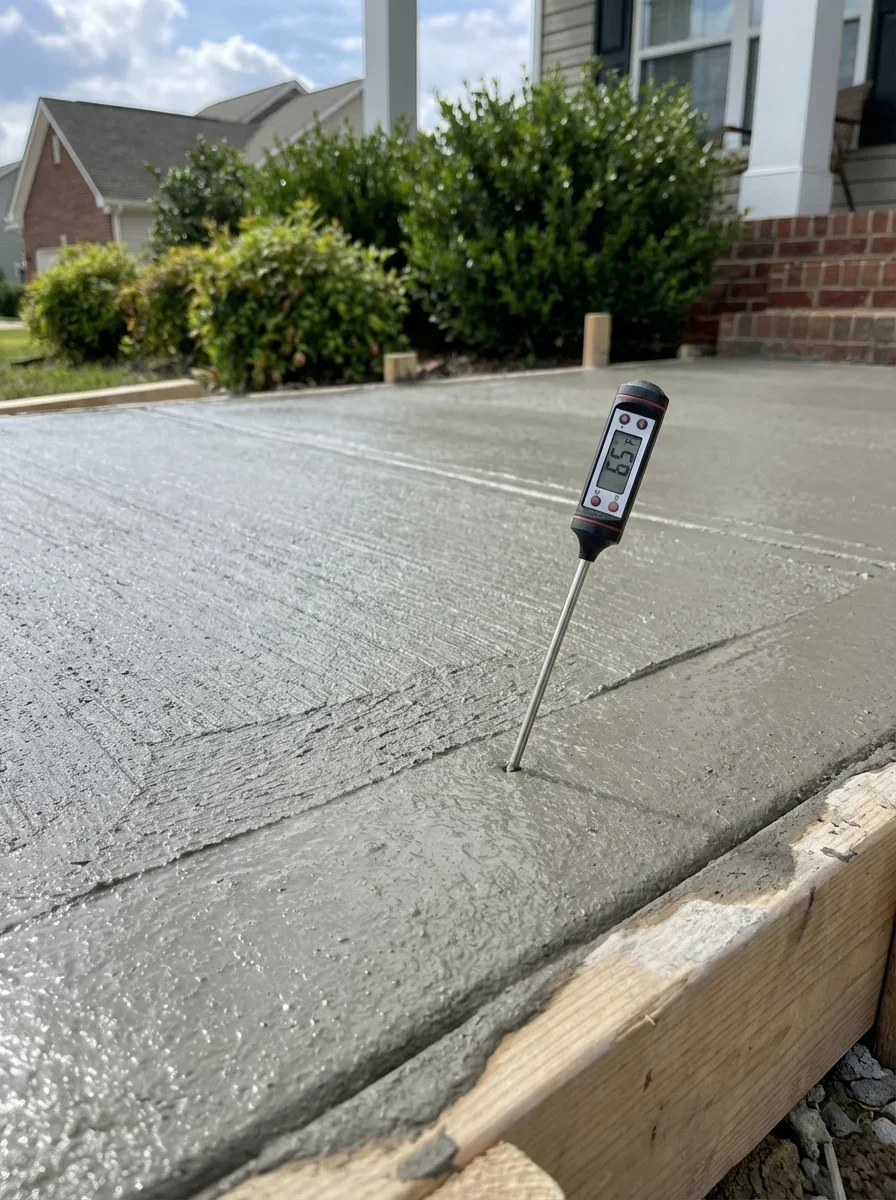
Seasonal timing is critical in Wisconsin. Concrete needs air and ground temperatures above 50°F for proper curing, making April through October your installation window.[3]
New construction planning should start with understanding the difference between a private walkway (your front path) and a code-compliant sidewalk (public right-of-way). Public sidewalks in cities like Green Bay and Appleton require permits, inspections, and specific width standards. Private walkways have more flexibility but still need proper base preparation to survive Wisconsin's 48-inch frost line.[3]
Spring projects scheduled after soil stabilization prevent settling issues. Fall installations must finish by mid-October before ground temperatures drop.
What Does Sidewalk Installation Cost in Wisconsin?
Lead time: know your numbers before calling contractors. Sidewalk costs break down by square footage, with significant variables based on project type and site conditions.
Cost by Project Type
| Project Type | Cost per Sq Ft | Notes |
|---|---|---|
| Basic residential walkway | $6-$8 | Standard 4" thickness, simple site prep |
| Enhanced residential | $8-$10 | Decorative finish, colored concrete, complex grading |
| Commercial sidewalk | $9-$12 | 5-6" thickness, ADA compliance, permits |
| Municipal/public | $10-$15 | Public bidding, engineered specs, inspections, traffic control |
A standard 4-foot-wide residential front walk (40 feet long = 160 sq ft) runs $960-$1,280 for basic installation. That same footage as a public sidewalk meeting municipal standards in Madison costs $1,600-$2,400 due to thickness requirements, permitting, and inspection protocols.
Size and Material Factors
Base preparation is your biggest cost driver after concrete itself. Sites requiring significant excavation, fill material, or drainage solutions add $2-$4 per square foot. Clay soils common in southeastern Wisconsin need extra base depth—skimping here means heaving and cracking within two freeze-thaw cycles.
Reinforcement choices:
- Wire mesh (standard residential): included in base pricing
- Rebar grid (commercial/heavy use): adds $0.50-$1.00/sq ft
- Fiber reinforcement: adds $0.25-$0.50/sq ft
Permits and inspections for public sidewalks add $150-$400 depending on municipality. Milwaukee and other larger cities require engineering stamps for projects over certain lengths.
Removal of existing concrete runs $2-$3 per square foot for breaking, hauling, and disposal. Projects replacing old walks should budget accordingly—a 160 sq ft removal costs $320-$480 before new installation begins.
Property value impact: Code-compliant sidewalks are expected infrastructure. Properties without them or with damaged walks face buyer negotiations and possible municipal liens in cities actively enforcing sidewalk ordinances.
The Sidewalk Installation Process
Sidewalk installation follows a specific sequence designed for Wisconsin's soil conditions and frost cycles. Cutting corners on base preparation guarantees problems within two winters.
Site Preparation and Base Work
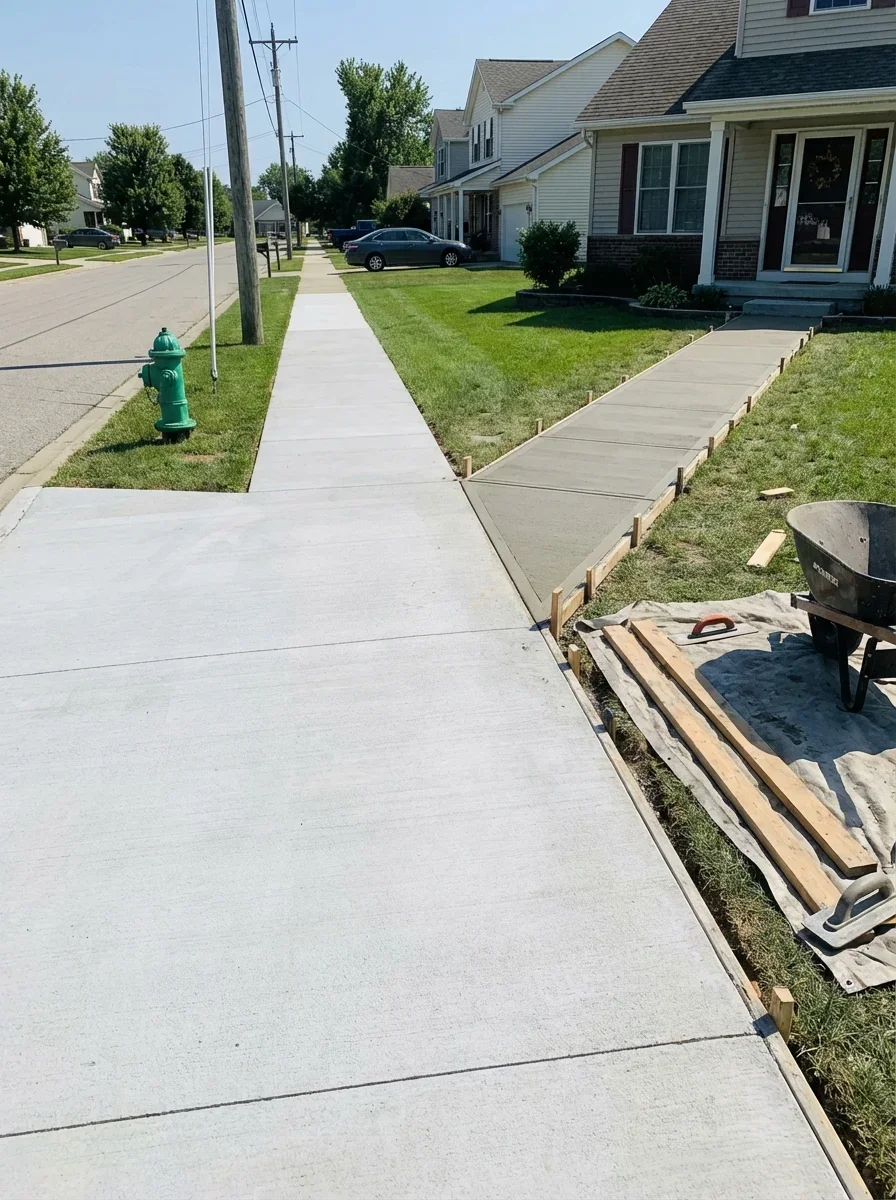
Contractors excavate to proper depth—typically 10-12 inches total to accommodate base material and concrete thickness. For public sidewalks, this means digging to the frost line with 4-6 inches of compacted gravel base.[1]
The base gets compacted in lifts (layers), not all at once. Proper compaction prevents settling that causes uneven sections later. Forms go in next, establishing width and elevation. String lines ensure proper drainage slope (minimum 1/4 inch per foot away from structures).
Forming, Pouring, and Finishing
Standard dimensions vary by use:
- Residential walkways: 4 feet wide, 4 inches thick
- Commercial sidewalks: 5-8 feet wide, 5 inches thick
- Public/ADA sidewalks: 6-10 feet wide, 5-6 inches thick[2]
Concrete arrives ready-mix with proper air entrainment (5-7%) for freeze-thaw resistance. Workers pour, screed level, then float the surface. Timing matters—finishing too early traps water, too late creates surface defects.
Edging and jointing happen next. Control joints every 4-5 feet control where cracks form (they will crack—joints guide where). Broom finishing provides slip resistance for Wisconsin ice and snow.
Curing and Final Inspection
Curing compound goes on immediately to retain moisture. The concrete needs seven days before foot traffic, 28 days for full strength. For municipal projects in Oshkosh or other cities, inspectors verify thickness, slope, and accessibility compliance before approval.
Typical timeline: 2-3 days for most residential projects; commercial and public installations take 3-5 days depending on length.
How to Choose a Sidewalk Contractor
Sidewalk work looks deceptively simple until you see a hack job heave after one winter. Ask the right questions upfront.
Questions to ask every contractor:
- What thickness and base depth do you recommend for my soil conditions?
- How do you ensure proper compaction of base materials?
- What air entrainment percentage do you specify for the concrete mix?
- Do you pull permits for municipal sidewalk work, and are you familiar with local inspection requirements?
- What's your curing process and timeline before allowing traffic?
- Can you provide references from projects completed 3-5 years ago? (You want to see how work holds up)
Licensing and insurance requirements: Wisconsin doesn't require state-level concrete contractor licensing, but municipalities often have their own requirements for public sidewalk work. Verify the contractor carries general liability ($1M minimum) and workers' compensation insurance. For projects in the public right-of-way, many cities require additional bonding.
Red flags that indicate problems:
- Vague answers about base preparation or frost protection depth
- Unwillingness to pull required permits ("the city won't know")
- Significantly lower bids without explanation of what's different
- No recent commercial or municipal references if your project requires code compliance
- Pressure to pour outside the recommended temperature window to "save the season"
For municipal projects: Ask specifically about their experience with ADA compliance, public bidding processes, and traffic control plans. A contractor experienced with residential walkways may lack the expertise for public sidewalk specifications and inspection protocols.
Compare at least three licensed contractors familiar with Wisconsin frost line requirements and local codes. The directory listings on this site include contractors experienced with both private walkways and municipal sidewalk projects across the state.
Frequently Asked Questions
Yes, a layer of compacted gravel under your sidewalk provides critical support and helps with drainage. The gravel base prevents water from pooling under the concrete and helps distribute weight. Your sidewalk should also slope slightly (about 1/4 inch per foot) for proper drainage.
- Wisconsin Department of Transportation. "Concrete Pavement Standards." https://wisconsindot.gov/dtsdManuals/consmat/std-spec/2025/4/451.pdf. Accessed February 24, 2026.
- International Code Council (Wisconsin Adopted Building Codes). "Sidewalk Specifications." https://up.codes/viewer/wisconsin/ibc-2015/chapter/10/means-of-egress#1009.4.1. Accessed February 24, 2026.
- University of Wisconsin Extension. "Frost Protection for Concrete Flatwork." https://fyi.extension.wisc.edu/forage/files/2014/02/Concrete-Frost-Protection.pdf. Accessed February 24, 2026.