




When You Need a Retaining Wall
You need a retaining wall when gravity and water are working against your property. Grade changes above 2 feet create erosion risk and unstable soil — especially on Wisconsin clay, which shifts dramatically through freeze-thaw cycles.
Common triggers:
- Sloped yards where topsoil washes away after rain
- Terraced landscaping to create usable flat zones for patios or gardens
- Driveway transitions where the grade drops sharply to the street
- Foundation exposure where soil has eroded away from basement walls
- Lakefront or creek bank stabilization in areas like Green Bay or Madison
Without proper grade control, you lose topsoil, undermine hardscaping, and create drainage problems that flow toward foundations. Wisconsin's spring thaw accelerates erosion — snowmelt carries sediment fast.
A 3-foot grade change can lose 6+ inches of topsoil per year without retention. Once erosion starts, it compounds with every rain event.
Walls above 4 feet typically require engineered design and permits in Wisconsin. If you're contemplating a tall wall or one supporting a driveway load, expect engineering involvement from the start.
What Does a Retaining Wall Cost in Wisconsin?
Cost by Wall Height and Material
Retaining wall pricing is calculated per square foot of wall face. Height is the dominant cost driver — taller walls require deeper footings, more backfill, potential engineering, and often geogrid reinforcement.
| Wall Height | Cost per Sq Ft (Installed) | Notes |
|---|---|---|
| 2-3 feet | $25 - $35 | Standard residential, no engineering |
| 4-6 feet | $40 - $60 | Engineering often required, geogrid needed |
| 7+ feet | $65 - $90+ | Always engineered, heavy equipment access critical |
A typical 3-foot-high, 40-foot-long wall runs $3,000 - $4,200. The same length at 5 feet jumps to $8,000 - $12,000 due to engineering, permitting, and reinforcement.
Material Options
Segmental concrete block (most common): Interlocking units with textured face options. Durable, repairable, proven in Wisconsin climates. Costs $28-45/sqft installed for standard walls.
Poured concrete: Smooth or formed finish. Required for high-load applications (driveways, commercial). Costs $50-75/sqft installed. Less forgiving if drainage fails — repair means removal.
Natural stone veneer over block: Aesthetic upgrade. Adds $12-18/sqft to block wall pricing.
Engineering and Permit Costs
Engineering stamps for walls over 4 feet: $800 - $1,800 depending on complexity. Permits vary by municipality but typically $150 - $400. Factor these into budgets early — you can't skip engineering on tall walls and expect long-term performance.
Cost Factors
- Accessibility: Tight backyard access requiring hand excavation adds 20-30%
- Soil conditions: Rock excavation or poor bearing soil increases footing costs
- Curves and corners: Complex layouts add 15-25% to labor
- Caps and lighting: Flatcap toppers add $8-12/LF; integrated lighting $15-25/LF
Investing in proper drainage and frost protection saves thousands in future repairs. A failed wall requires complete removal and rebuild — there's no partial fix when the footing moves or water damage occurs.
The Retaining Wall Installation Process
Site Assessment and Drainage Planning
Every retaining wall project starts with site evaluation. The contractor examines soil type, grade change, water flow patterns, and what the wall will support. Drainage design happens before materials are chosen — water pressure behind a wall is the #1 cause of failure.
Wisconsin clay soils retain moisture and expand when frozen. Without proper drainage, hydrostatic pressure pushes walls forward. The solution: perforated drain pipe at the footing level, 12+ inches of crushed gravel backfill, and weep holes every 4-6 feet to release water.
Excavation and Frost Footing
The excavation extends below finished grade to accommodate:
- Frost footing (minimum 48 inches deep in Wisconsin)
- Compacted gravel base (6-8 inches for leveling and drainage)
- First course below grade (buried for stability)
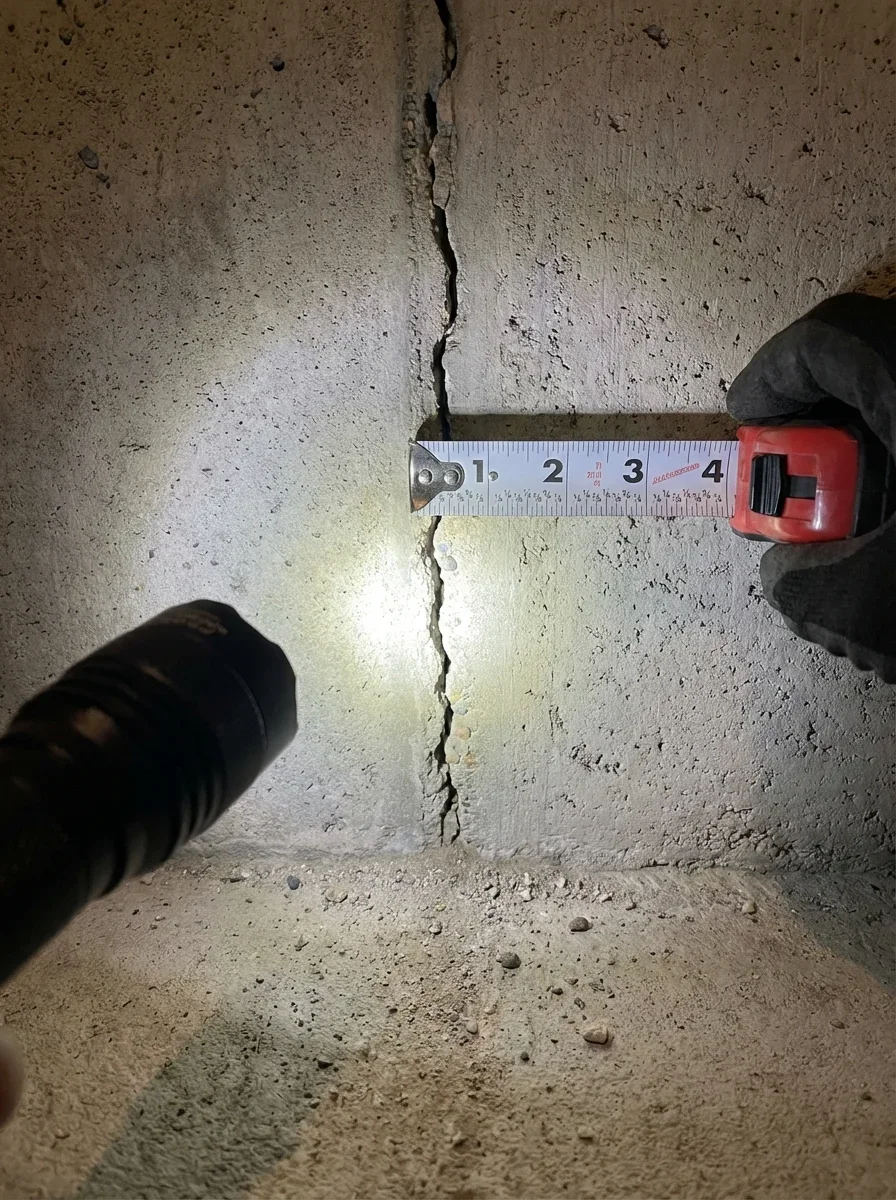
Frost footings prevent heaving. When soil freezes and expands below the wall base, it lifts the structure. One winter cycle can crack a wall built on shallow footing. Contractors pour a concrete footing or use a deep compacted stone base depending on wall type.
Wall Construction and Backfill
Segmental block walls go up course by course. Each block interlocks and gets pinned (on tall walls) or relies on weight and setback angle. Geogrid reinforcement fabric ties into the backfill every 2-3 courses on walls over 4 feet — it anchors the wall into the hillside.
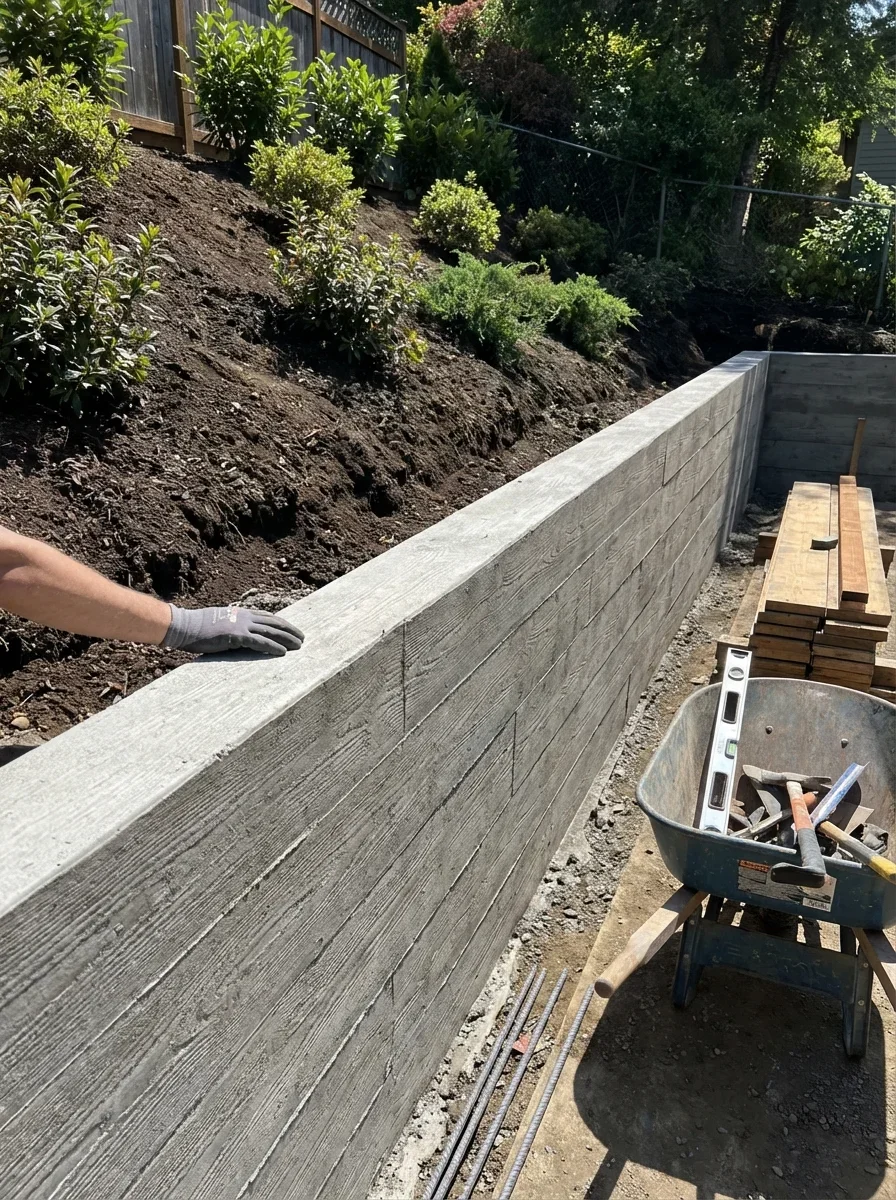
Poured concrete walls require formwork, rebar, and curing time. More engineering-intensive but necessary for high-load applications like driveway support.
As the wall rises, backfill happens in lifts — 12 inches of gravel, compacted, then repeat. Clean drainage stone (no fines) goes directly behind the wall. Native soil can backfill further back after the drainage zone is established.
| Wall Type | Install Time (per 30 LF) | Flexibility |
|---|---|---|
| Segmental block | 2-3 days | Moderate curves possible |
| Poured concrete | 4-6 days | Straight or gentle curves |
| Timber/gravity stone | 1-2 days | Informal, lower walls only |
Most residential walls in Appleton, Oshkosh, and Milwaukee fall in the segmental block category — proven performance, cost-effective, repairable.
How to Choose a Retaining Wall Contractor
Questions to Ask
- Do you provide engineered designs for walls over 4 feet? (Or do they coordinate with a local structural engineer?)
- What's your standard drainage system behind walls? (Look for specifics: pipe size, gravel type, weep hole spacing)
- How deep do you excavate for frost protection? (Anything less than 48" in Wisconsin is insufficient)
- Can I see photos of similar walls you've completed 5+ years ago? (Age reveals quality — blocks shouldn't bow or crack)
- What geogrid reinforcement do you use on tall walls? (Brand and spacing matter)
- Do you pull permits for walls requiring them? (Some contractors skip this — risk transfers to you)
Red Flags
- Quoting without a site visit — soil, drainage, and grade complexity vary drastically
- "We don't need engineering for that height" — when local code requires it, this is liability avoidance
- No mention of drainage systems — the fastest way to identify an unqualified installer
- Significantly lowest bid — often means shallow footings, no drainage pipe, or skipped reinforcement
Wisconsin Requirements
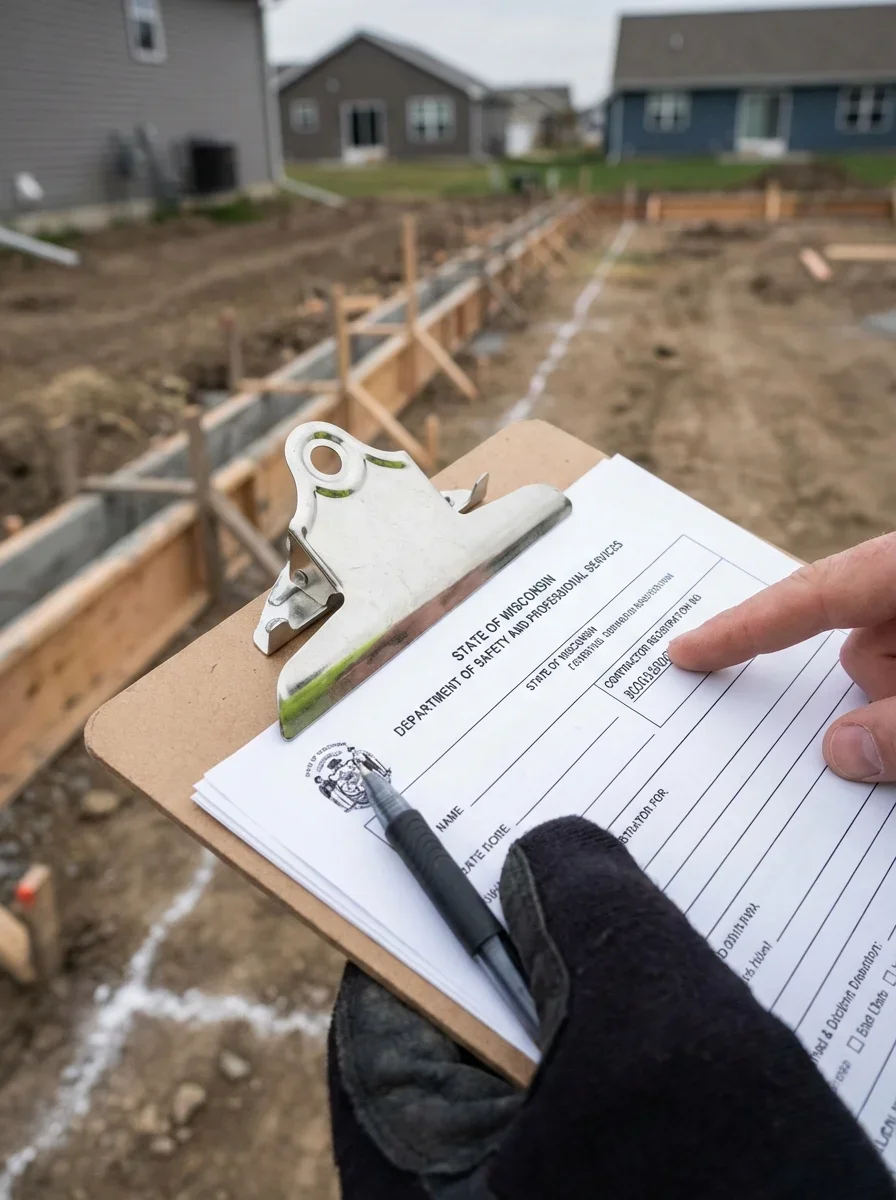
Contractors performing retaining wall work don't need specialty licensing in Wisconsin, but engineered walls require a PE stamp. Insurance should include general liability (minimum $1M) and workers' comp. Ask for proof.
Compare contractors based on drainage details, frost protection depth, and engineering coordination — not just price per square foot. A properly built wall lasts 30+ years. A cheap wall fails in 3.
Review multiple quotes through directories that show contractor portfolios and credentials side-by-side. Focus on installers with 10+ completed walls in your height range and demonstrated drainage expertise.
Frequently Asked Questions
The cheapest retaining wall options are concrete/cinder blocks ($20-35/sq ft), pressure-treated timber ($15-30/sq ft), or locally-sourced natural stone. DIY installation saves significantly on labor. Gabion baskets (wire cages filled with rocks) offer a modern, budget-friendly alternative.