



When Your Garage Floor Needs Replacement
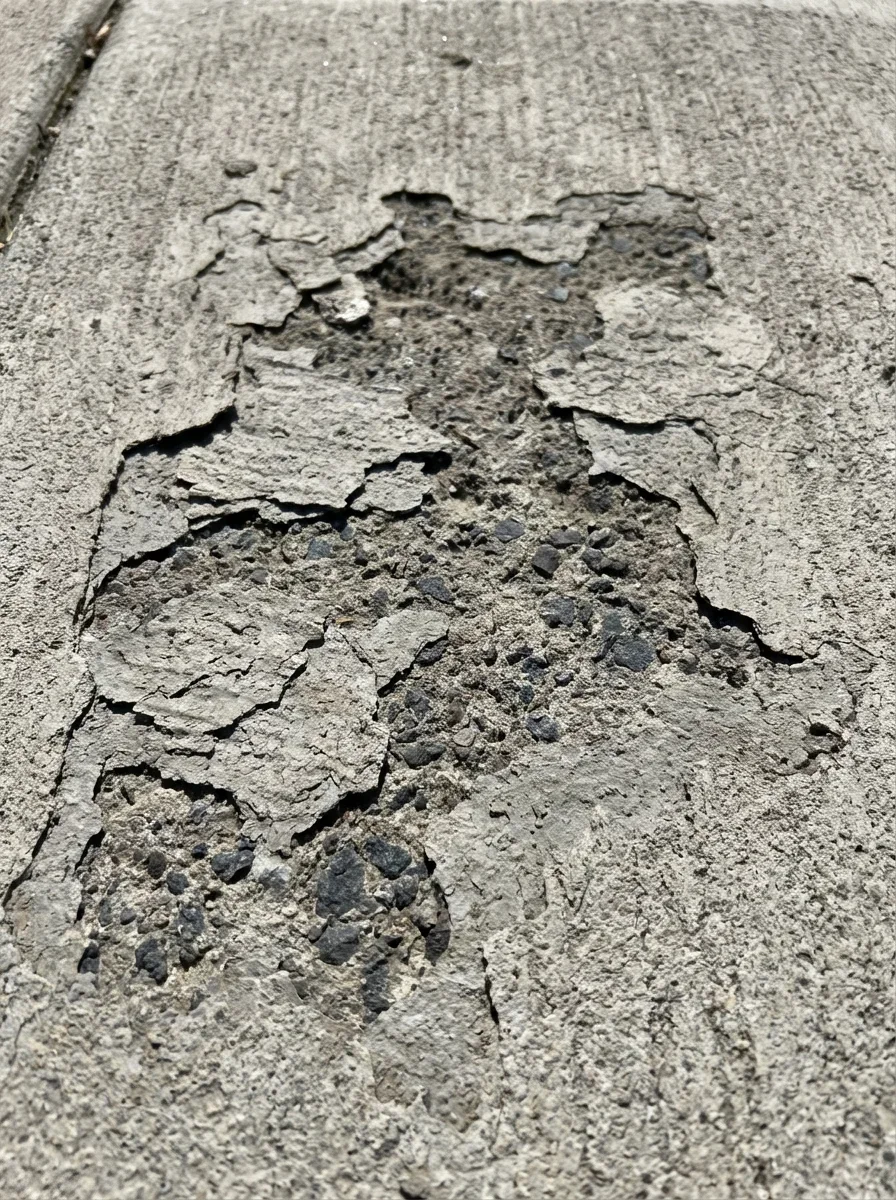
You'll know it's time when you see cracks wider than 1/4 inch, settling that creates uneven sections, or surface scaling that exposes aggregate. These aren't cosmetic issues—they signal base failure or improper installation.
Surface damage like minor spalling or light cracking often qualifies for resurfacing. But if you notice:
- Sections that have sunk or tilted
- Water pooling in new places after rain
- Widespread cracking in multiple directions
- Exposed rebar or deteriorating edges
You're looking at full replacement. The base has likely failed or was never installed correctly.
Wisconsin's freeze-thaw cycles accelerate damage. A garage floor installed without proper base preparation—common in older construction—will crack within 5-10 years as frost heaves the slab. Garages in Madison and Green Bay built before modern frost-depth standards often need replacement by age 20-25.
Base preparation determines lifespan. A 4-inch slab on 6 inches of compacted gravel will outlast a 6-inch slab poured directly on clay soil—every time.
What Does a Garage Floor Cost in Wisconsin?
Standard pricing depends on thickness, base preparation, and finishing. Here’s what 400-square-foot single-car garages typically cost:
For two-car garages (600-700 sqft), multiply by 1.5-1.75. Three-car garages see better per-square-foot pricing due to efficiency.
Cost Factors
Base preparation drives 30-40% of total cost. Proper excavation, gravel base, and compaction prevent callbacks for cracking. Contractors who lowball often skip compaction or use inadequate base depth.
Thickness requirements add $1.50-$2.50 per square foot when moving from 4” to 6” slabs. The extra concrete costs less than you’d expect — most expense comes from base work and labor.
Access and removal affect pricing substantially. A detached garage with easy equipment access costs less than attached garages requiring careful demolition around foundation walls.
Finishing upgrades like epoxy coatings or decorative stamping aren’t covered here — this is plain concrete. Penetrating sealers add $0.75-$1.50/sqft but extend floor life significantly in Wisconsin’s climate.
Investment Value
A properly installed garage floor lasts 30-50 years with minimal maintenance. Property appraisers in the Madison area note that updated garage floors contribute $3,000-$5,000 to home value — roughly 60-80% of installation cost recovered immediately, with full ROI when the durability prevents future foundation issues.
The Garage Floor Installation Process
Wisconsin garage floors require deliberate base work and frost protection. The installation breaks into three phases.
Excavation & Removal
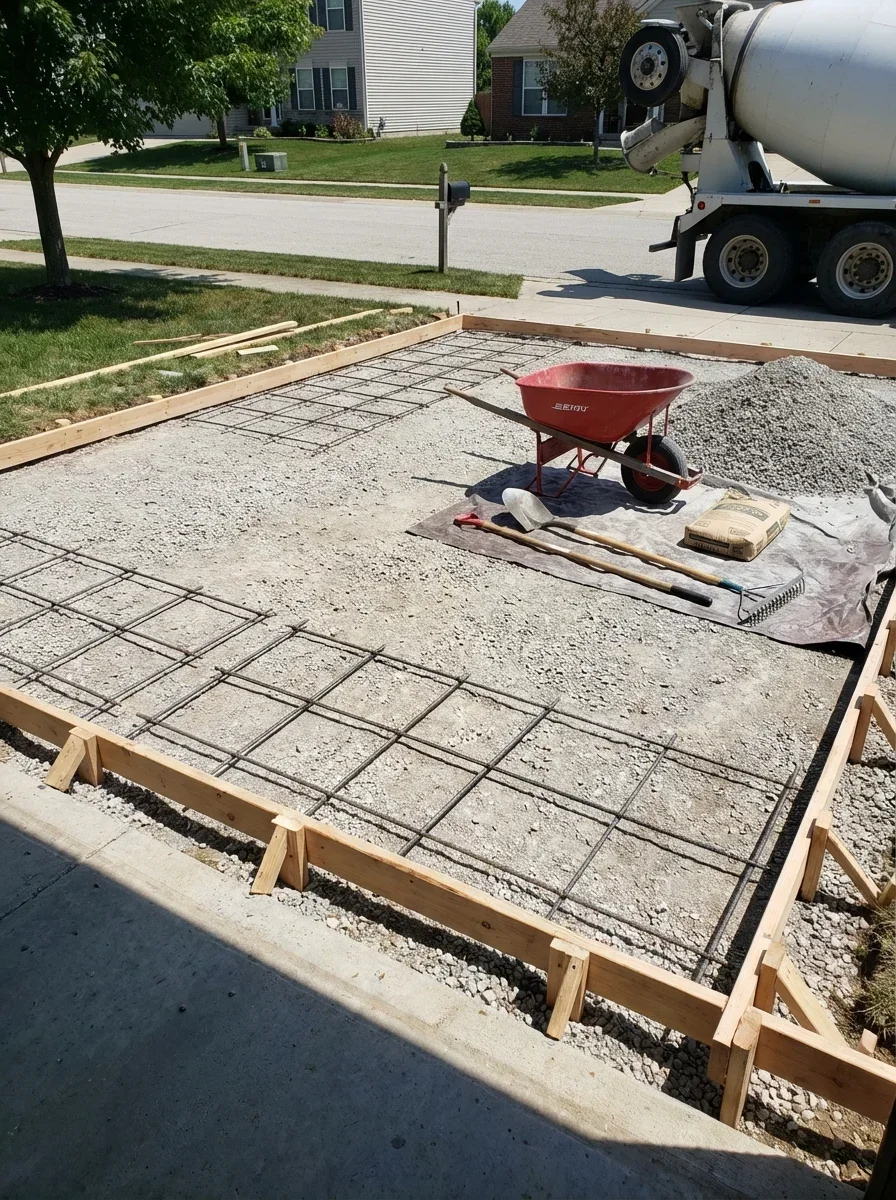
Day 1Remove existing slab (if replacing) or dig to depth — typically 10-12 inches below finished floor height.
Base Installation & Compaction
Day 1–24-6 inches of compacted crushed stone or gravel base[1]. Mechanical compaction in 2-inch lifts prevents future settling. The base matters more than concrete thickness — contractors in Appleton and Oshkosh who skip proper compaction create floors that crack within two years.
Vapor Barrier & Perimeter Protection
Day 26-mil polyethylene sheeting blocks ground moisture. For attached garages, footings must extend to 48-inch frost depth.[2]
Pour & Finishing
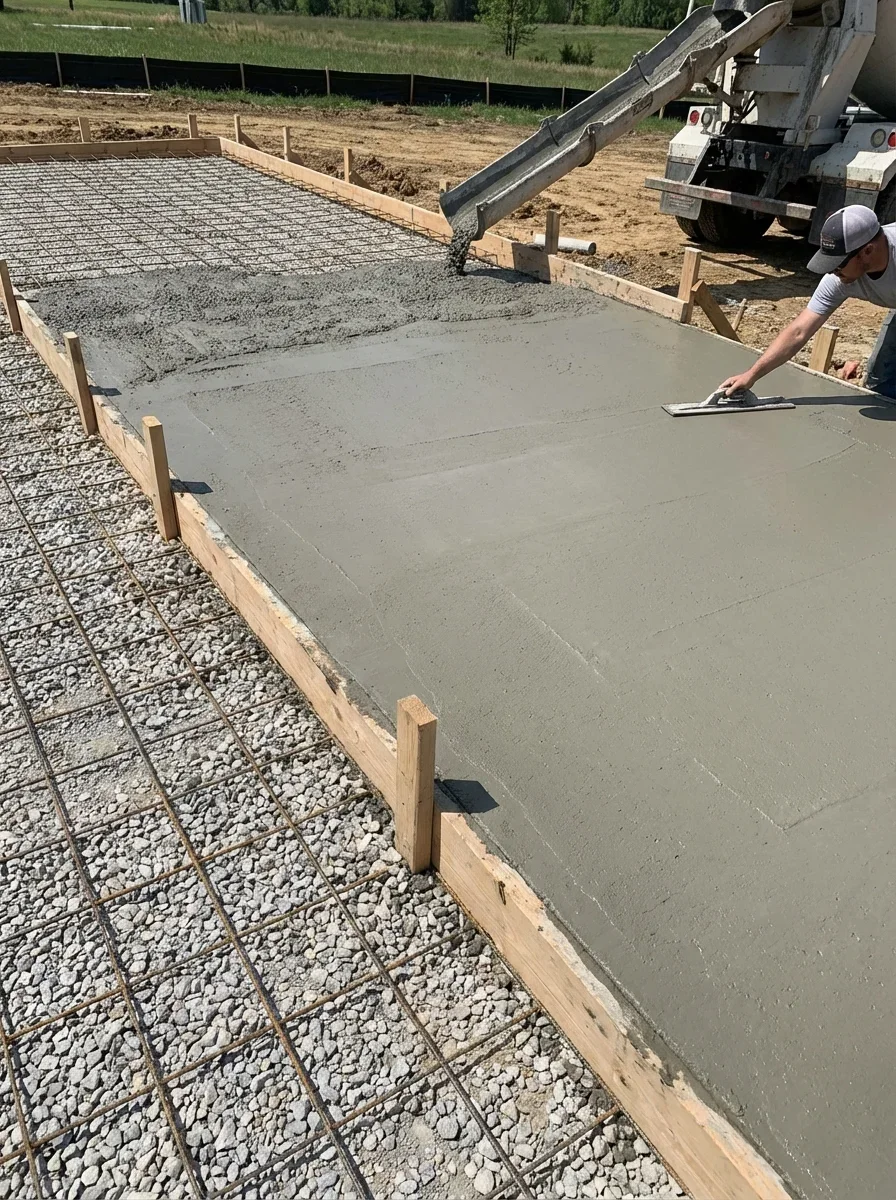
Day 2–3Concrete arrives at 3,000-4,000 PSI minimum. Standard floors use 4-inch thickness for passenger vehicles, 5-6 inches for trucks or workshop equipment[1]. Wire mesh or fiber reinforcement standard; steel rebar adds cost but prevents catastrophic cracking. Broom finish (standard) for traction, smooth trowel for easier cleaning, or penetrating sealer for moisture protection.
Curing & Protection
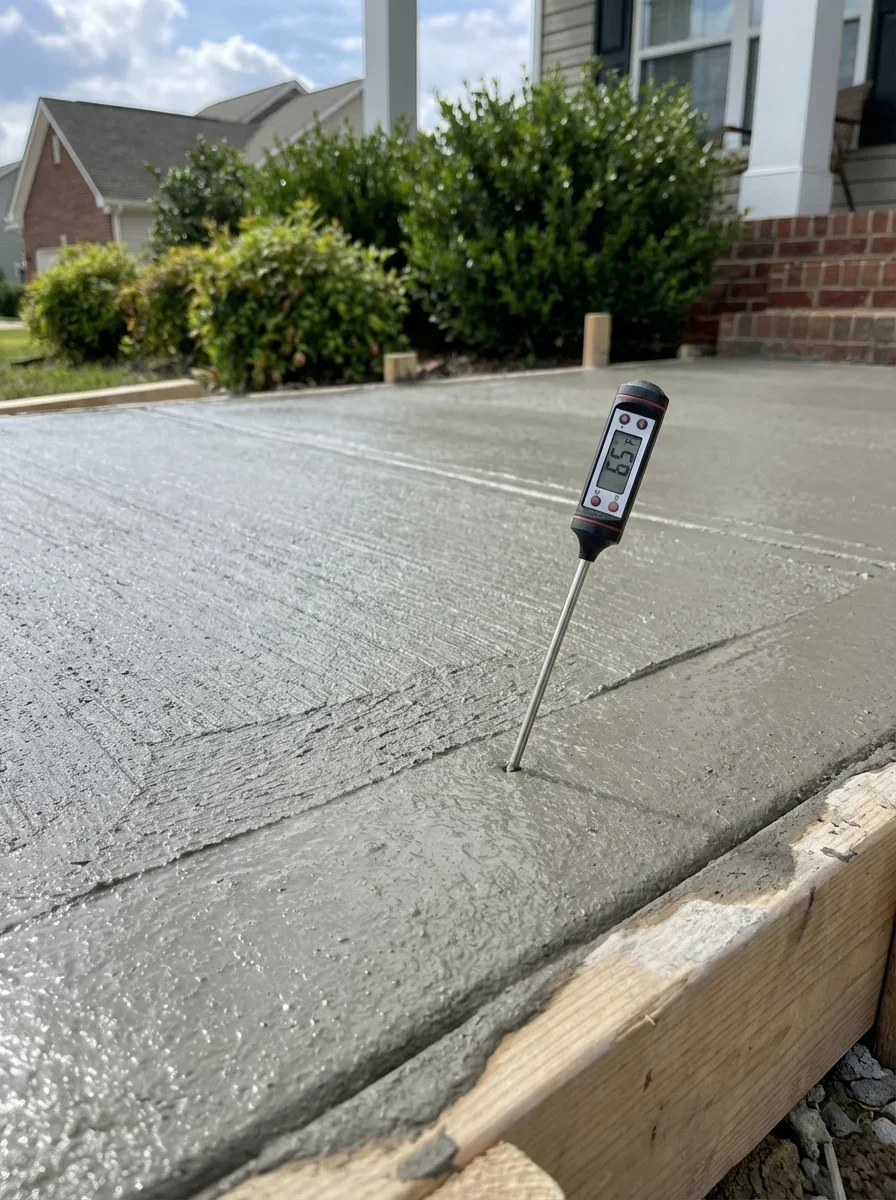
Days 3–2870% strength in seven days, full cure at 28 days. Light foot traffic after 3-4 days. Wait the full 28 before parking heavy vehicles or placing workshop equipment. Optimal pours between 50-80°F — Milwaukee-area contractors pour through winter using heated enclosures, but spring and fall remain ideal.
How to Choose a Garage Floor Contractor
Wisconsin garage floors require specific expertise in base preparation and frost protection. Use this checklist when evaluating contractors.
Questions to Ask
- What base depth do you install? Correct answer: 4-6 inches of compacted gravel. Anyone suggesting less will deliver a floor that cracks.
- How do you handle frost protection for attached garages? Should mention 48-inch footing depth or frost-protected shallow foundation techniques[2].
- What concrete PSI do you specify? Minimum 3,000 PSI; 4,000 PSI preferred for Wisconsin climate.
- What thickness do you recommend for my use case? Listen for questions about vehicle weight and workshop equipment before they answer.
- How do you reinforce the slab? Wire mesh minimum; rebar for heavier use or larger spans.
- What's your curing and use timeline? Should specify 28 days before heavy vehicle use, with explanation of why timing matters.
Red Flags
- Quotes without site inspection or base assessment
- Prices significantly below $6/sqft (they're cutting corners somewhere)
- Unwilling to provide references from jobs 3+ years old (you want to see how their work holds up)
- Vague answers about base preparation or frost depth requirements
- Pressure to pour in freezing temps without heated enclosure setup
Wisconsin Requirements
Concrete contractors need proper insurance (general liability minimum $1M) and should carry workers' compensation. While Wisconsin doesn't require state licensing for concrete work, many municipalities require permits for garage floor replacement. Your contractor should handle permit acquisition.
Compare at least three contractors from your area. The directory listings include verified reviews and project photos—look for clean base preparation and proper edge work in completed projects.
Frequently Asked Questions
Garage floor coating for an average 2-car garage costs $1,595-$4,337, with a national average of $2,441. Epoxy coating runs $3-12/sq ft, polyurea $4-15/sq ft, and polyaspartic $5-18/sq ft. Pricing varies by coating type, garage size, and concrete condition.
- Federal Highway Administration (FHWA), U.S. Department of Transportation. "Concrete Pavements for Airports, Streets, Roads, and Parking Lots." https://www.fhwa.dot.gov/publications/research/infrastructure/pavements/05039/05039.pdf. Accessed February 24, 2026.
- Federal Highway Administration (FHWA), U.S. Department of Transportation. "Frost-Protected Shallow Foundations in Residential Construction." https://www.fhwa.dot.gov/publications/research/infrastructure/structures/97134/97134.pdf. Accessed February 24, 2026.