


Common Driveway Problems That Need Repair
You know something's wrong when you see it. The question is whether you're looking at a $400 repair or a $8,000 replacement.
Cracking and Frost Damage
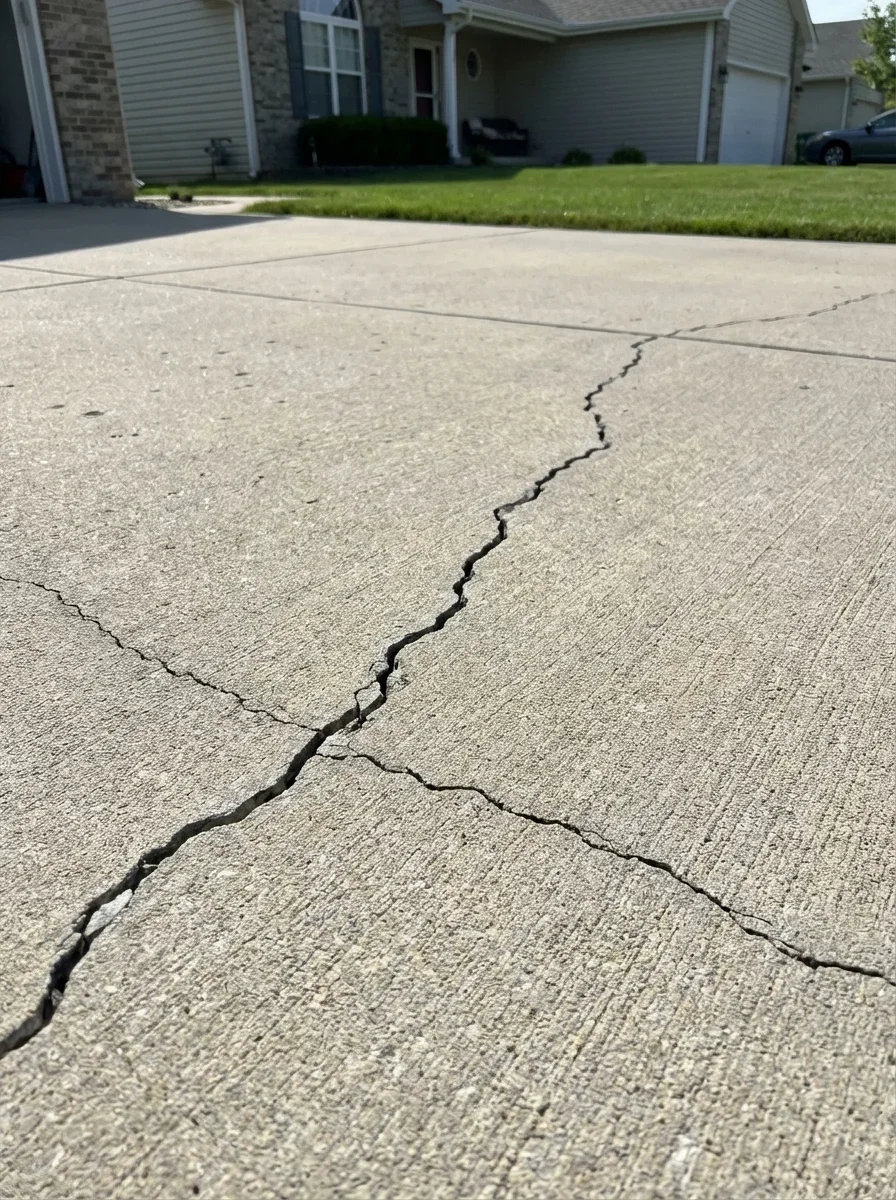
Freeze-thaw cycles are the primary enemy of Wisconsin driveways. Water seeps into small cracks, freezes at night, expands, and widens the gap. One winter season can turn a hairline crack into a quarter-inch opening.
Look for spiderweb patterns near the middle of slabs, straight cracks running parallel to expansion joints, or diagonal cracks from corners. Fresh cracks show clean edges. Older damage collects dirt and grows weeds.
Spalling and Surface Deterioration
The surface flakes away in patches, exposing the aggregate stone underneath. This happens when water penetrates the surface and freezes, popping off the top layer. It accelerates once it starts — each exposed section allows more moisture penetration.
Milwaukee and Madison homeowners see this most on the apron sections where snowmelt and deicing salt concentrate.
Sinking and Settlement Issues
Concrete slabs rest on compacted base material. When that base erodes or settles unevenly, the slab above drops. A two-inch drop creates drainage problems and trip hazards — and it won't correct itself.
Settlement happens fast in Wisconsin. Spring thaw can wash out base material in weeks, dropping sections several inches before you notice the drainage problem it creates.
Common causes: poor initial compaction, erosion from downspouts draining onto the driveway, or voids forming beneath slabs from water movement through Wisconsin's clay soils.
What Does Driveway Repair Cost in Wisconsin?
Real numbers for the most common repairs:
Crack Sealing
MinorHot-pour sealant prevents water penetration. Basic crack sealing runs $300-$600 for a typical two-car driveway with moderate cracking (50-100 linear feet).
Full Crack Routing & Sealing
ModerateMultiple cracks sealed professionally with routing for deeper penetration. Half-day job for most driveways.
Mudjacking / Slab Leveling
SignificantLifting and leveling sunken concrete sections. Standard 10x10 ft slab costs $600-$1,200. Polyurethane foam injection costs 30-50% more but cures faster.
Resurfacing Overlay
MajorNew ¼”-2” surface bonded to old concrete. A 400 sqft driveway runs $1,200-$3,200. Only works when underlying concrete is structurally sound.
Edge Repair & Rebuilding
SevereForming and pouring new edges where existing concrete has crumbled or broken away. Common on driveways without proper edging.
Price factors: crack width (wider requires more material), number of cracks, temperature (cold weather requires special sealants that cost more), and surface preparation needed.
Most Wisconsin contractors require a compacted gravel base 4-8 inches deep beneath all concrete work, essential for preventing frost heave given our 48-inch frost line.[3]
The Driveway Repair Process
What happens depends entirely on what's damaged and how severely.
Assessment and Diagnosis
A contractor measures crack width and length, checks for vertical displacement at joints, taps sections to detect hollow spots underneath, and evaluates the overall condition. They're determining whether the substrate is stable or compromised.
If more than 30% of the surface shows damage, or if multiple slabs have settled unevenly, replacement usually makes more financial sense than patching.[1]
Repair Method Selection
| Damage Type | Repair Method | When It Works |
|---|---|---|
| Hairline cracks (<¼") | Crack sealing with flexible polymer | Surface cracks with no vertical movement |
| Wide cracks (¼"-½") | Routing and sealing | Stable substrate, crack isn't actively spreading |
| Sunken sections | Mudjacking/slabjacking | Slab is intact, just settled; base material washable |
| Surface spalling | Resurfacing overlay | Structural concrete underneath is sound |
| Multiple deep cracks | Full replacement | Damage exceeds 30% or substrate has failed |
Execution and Curing
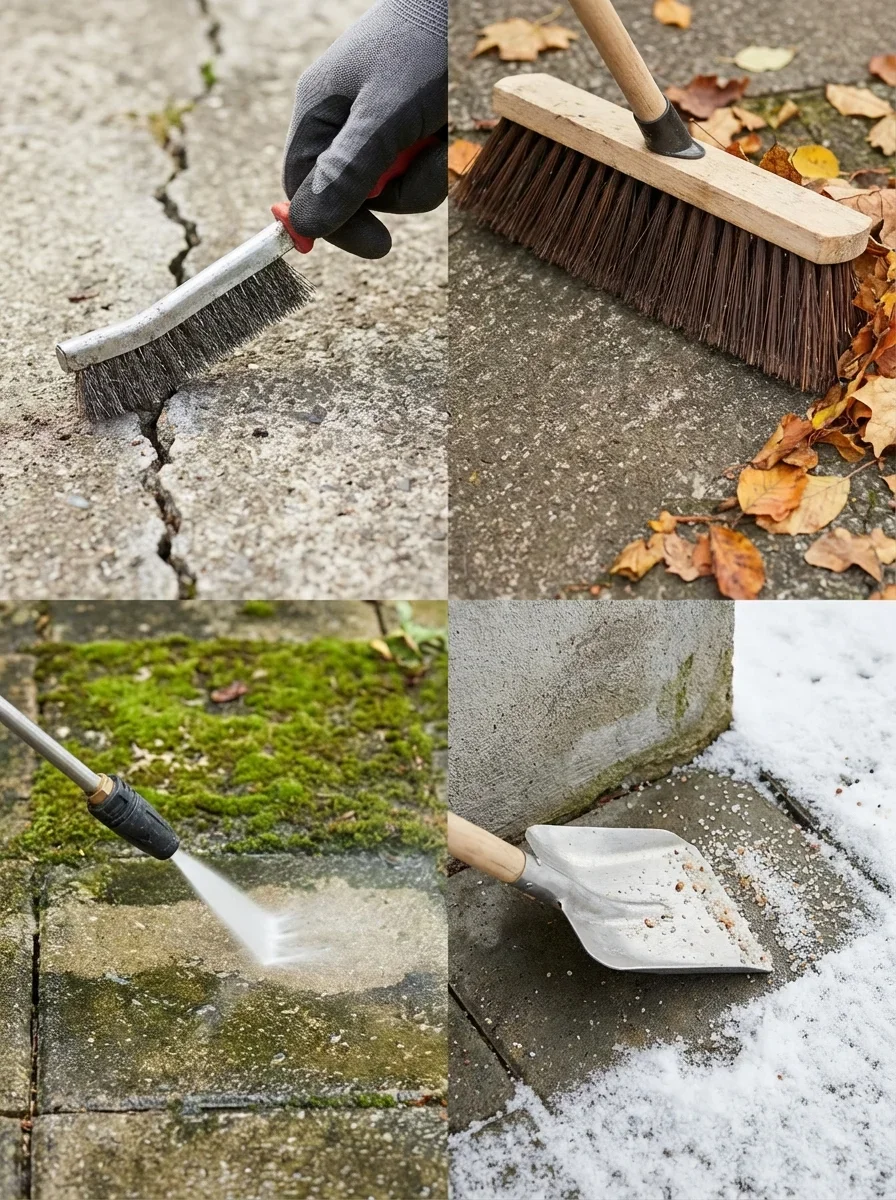
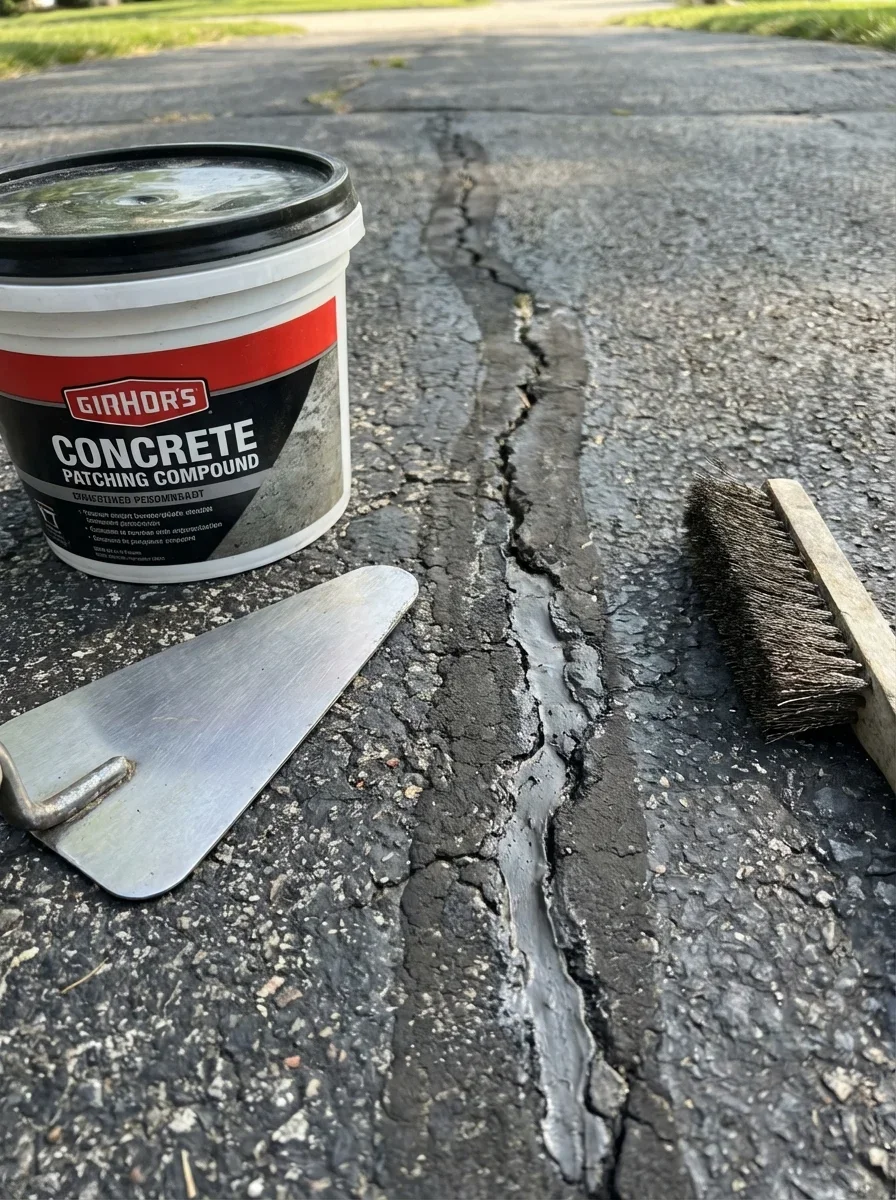
Crack sealing: Clean out the crack with a wire brush and air compressor, fill with hot-pour rubberized sealant or polyurethane. Temperature must be above 40°F. Takes 2-4 hours to cure.
Mudjacking: Drill 1-2" holes through the slab every few feet, pump limestone slurry or polyurethane foam underneath until the slab lifts to level, patch the holes. The slab is usable within hours. Most driveways in Green Bay or Appleton need 3-6 holes per settled section.
Resurfacing: Apply a ¼" to 2" bonding overlay after cleaning and priming the existing surface. This requires 3-7 days curing before driving on it. Only works if the underlying concrete is structurally sound without deep cracking.
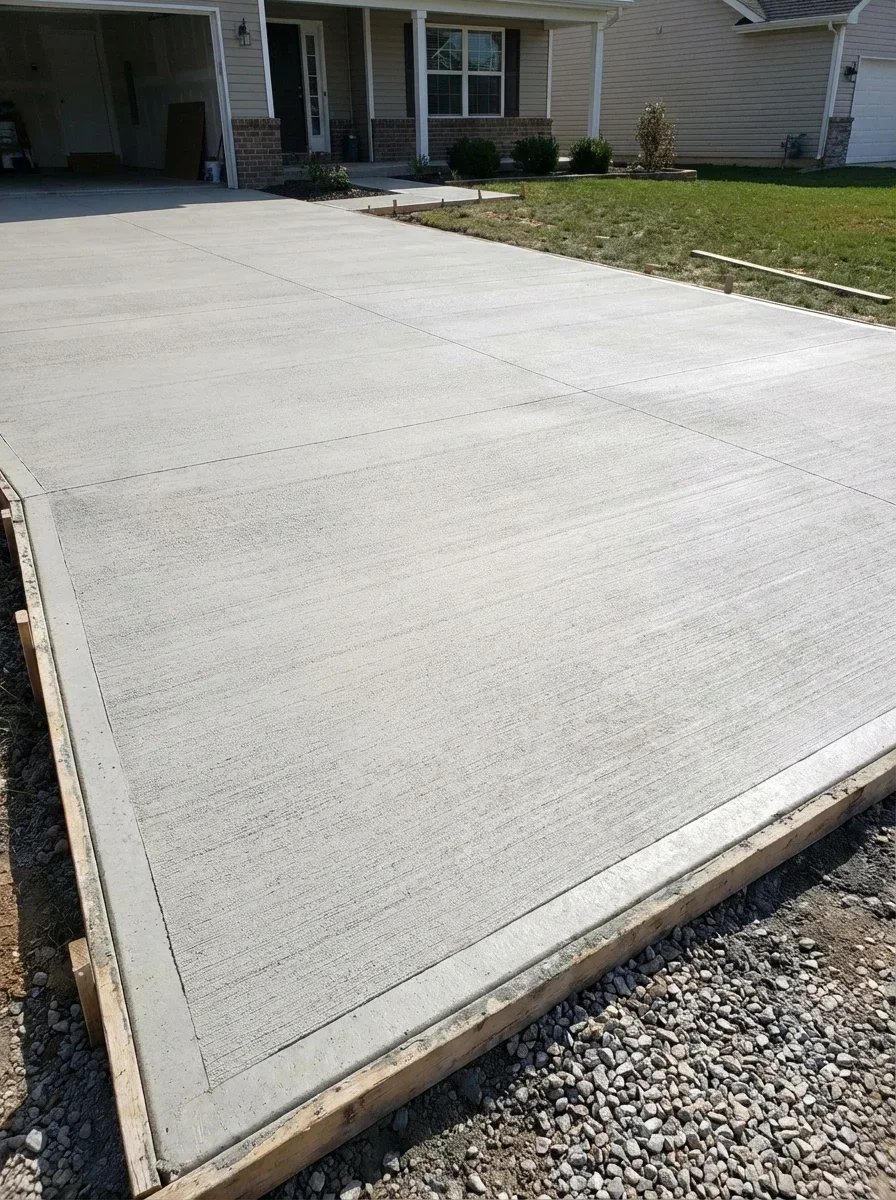
Joint spacing matters. Proper control joints should be placed every 15 feet maximum to prevent random cracking from temperature changes and drying shrinkage.[2]
Should You Repair or Replace Your Driveway?
Use this decision framework:
Repair makes sense when:
- Damage covers less than 30% of the surface
- The substrate is stable (no widespread settlement)
- Cracks are isolated, not networked throughout
- You plan to sell within 5 years (repairs improve appearance cheaply)
- Sunken sections can be lifted without re-cracking
Replace instead when:
- Multiple slabs have settled unevenly
- Cracking is widespread (more than 30% of surface)
- Spalling has exposed reinforcement or goes deeper than ½"
- The driveway is 25+ years old with multiple previous repairs
- Base material has clearly failed (voids beneath, erosion channels)
How to Choose a Driveway Repair Contractor
Questions to ask:
- Do you warranty the repair, and for how long? (Minimum one year for sealing, 2-5 years for mudjacking)
- What's causing this specific damage, and will your fix address that cause?
- What's your process for preparing the surface before applying sealant or overlay?
- Can I see photos of similar repairs you've completed locally?
- Are you licensed and insured for this work in Wisconsin?
- What's the realistic lifespan of this repair given my driveway's condition?
Red flags:
- Pressure to repair everything when only some areas need work
- No mention of addressing drainage issues contributing to settlement
- "Lifetime warranty" claims on crack sealing (unrealistic given Wisconsin weather)
- Unwillingness to explain why they chose one method over another
Wisconsin doesn't require specific flatwork licensing, but contractors should carry general liability insurance and workers' compensation. Ask for proof.
Compare at least three local contractors. The lowest bid often skips surface prep steps that determine whether repairs last two years or ten.
Frequently Asked Questions
Repair is worth it when the driveway's structural integrity is sound with only surface-level damage. Replace if there's extensive cracking, crumbling, or base failure. Repair costs 50-70% less than replacement and is ideal for minor cracks, settling, or surface wear.
- Wisconsin Department of Agriculture, Trade and Consumer Protection. "Concrete Parking Lot Construction." https://datcp.wi.gov/Documents/Pubs34/PLSTCON.PDF. Accessed February 24, 2026.
- U.S. Department of Agriculture Forest Service. "Concrete Pavement Design, Construction and Performance, Second Edition - Chapter 4: Joints." https://www.fs.usda.gov/t-d/pubs/htmlpubs/htm02732810/page02.htm. Accessed February 24, 2026.
- University of Minnesota Extension. "Planning and Estimating Concrete Work." https://extension.umn.edu/construction-planning-and-estimating/planning-and-estimating-concrete-work. Accessed February 24, 2026.