



Signs Your Concrete Needs Repair
You're noticing the damage because it's real. Here's what to look for and why it escalates:
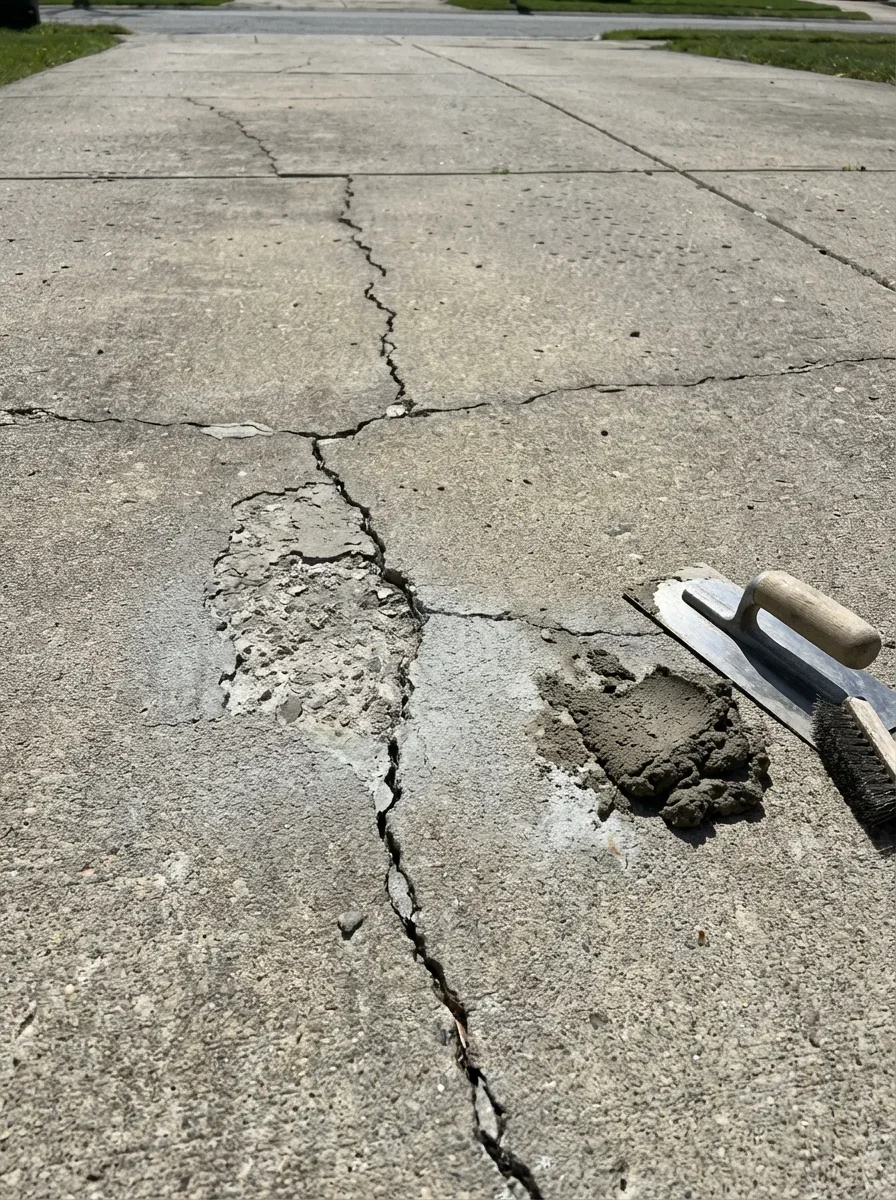
Cracks wider than ¼ inch signal foundation movement or settling. Hairline cracks become pathways for water infiltration. Once water seeps under the slab during spring thaw, it undermines the base and accelerates settling. In Milwaukee's clay soil, this happens fast.
Sunken or tilted slabs create drainage problems and trip hazards. A driveway section that's dropped even an inch channels water toward your foundation instead of away from it. Each freeze-thaw cycle worsens the void underneath.
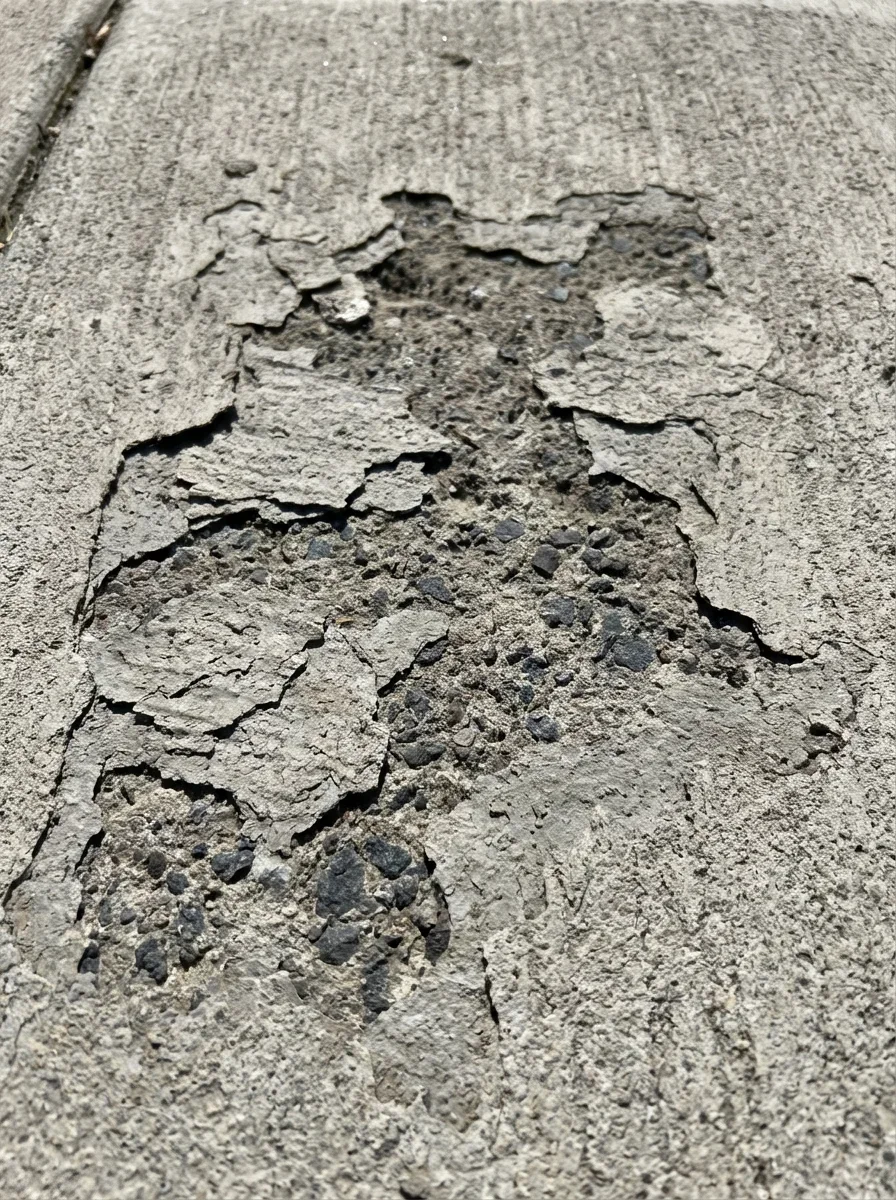
Spalling and surface flaking expose the aggregate layer. Wisconsin's 48-inch frost line requires concrete mixes with 4-7% air entrainment to resist freeze-thaw damage[1]. Older concrete without proper air content deteriorates faster — the surface literally breaks apart after repeated winter cycles.
Timing matters. Concrete that settled ½ inch this year will drop another inch next spring as water erodes the base. Repair costs double when minor settling becomes structural failure.
Uneven sections at control joints mean the base has washed out or compressed unevenly. This is common around Madison and Green Bay after heavy spring runoff. If you can rock a slab with your foot, the base is compromised.
What Does Concrete Repair Cost in Wisconsin?
Real numbers for the region. Costs vary by method, square footage, and accessibility.
Crack Repair and Patching Costs
Epoxy Crack Injection
MinorSmall crack repairs often carry $200–$400 minimum service charges. A 20-foot driveway crack typically runs $150–$250 total.
Shallow Patching (1-2” deep)
ModeratePatching a 4×6 foot sunken section costs $100–$200. Best for localized surface damage with stable substrate.
Full-Depth Structural Patching
SignificantRequired when cracks penetrate through the full slab thickness or substrate has shifted.
Concrete Leveling Methods and Pricing
This is where cost differences get significant:
Heavier (adds load to base) but costs less for driveways and large patio sections. Can’t drive on it for a full day.[2]
Weighs 90% less than mudjacking material. Cures in minutes. Cost premium reflects specialized equipment.
A typical 200-square-foot settled driveway section costs $1,000–$2,000 with mudjacking, $2,000–$5,000 with foam.
Resurfacing and Overlay Costs
Surface spalling across an entire slab can be resurfaced rather than replaced:
- Spray-applied overlays: $3–$6/sqft (thin coat, color options)
- Troweled microtopping: $5–$10/sqft (thicker, decorative patterns)
A 400-square-foot patio resurfacing runs $1,200–$4,000 depending on finish complexity. This only works if the underlying slab is structurally sound — no major settling or deep cracks.
Cost factor: Accessibility matters. Backyard patios requiring wheelbarrow transport add 15-20% to leveling costs. Driveways with direct equipment access cost less per square foot.
How Concrete Repair Works
The repair method depends on damage type and severity. Here's what actually happens:
Damage Assessment and Diagnosis
A qualified contractor evaluates three factors: crack depth, slab stability, and base condition. They'll probe beneath settled slabs to check for voids and test if the base can support leveling. Settlement under 2 inches with a stable base qualifies for leveling; deeper settling or eroded bases require replacement[2].
Repair Method Selection
| Damage Type | Repair Method | Timeline |
|---|---|---|
| Hairline to ¼" cracks | Epoxy or polyurethane injection | 2-4 hours |
| Settled slabs (under 2") | Mudjacking or foam leveling | 4-8 hours |
| Surface spalling | Concrete resurfacing overlay | 1-2 days |
| Deep cracks (structural) | Full-depth patching or replacement | 2-5 days |
Surface Preparation and Application
Proper bonding prevents future failures. Contractors grind or shot-blast existing concrete to expose aggregate, then apply bonding agents before new material. Patches that aren't properly prepared pop off within a year — common with rushed repair jobs in Appleton and Oshkosh.
For leveling, small holes (mudjacking) or dime-sized ports (foam) are drilled, filler material is pumped beneath the slab, and holes are patched with color-matched mortar. The slab lifts in real-time as material fills voids.
Wisconsin scheduling: Most repairs require temperatures above 50°F for proper curing. Spring and fall offer ideal conditions; summer heat can complicate large pours. Avoid late-fall repairs that don't have time to cure before freeze cycles start.
How to Choose a Concrete Repair Contractor
Concrete repair quality varies wildly. Use this checklist to separate qualified specialists from general handymen:
Questions to Ask
- What method do you recommend and why? They should explain pros/cons of mudjacking vs foam for your specific situation, not just push one service.
- How do you prepare surfaces for bonding? Look for grinding, shot-blasting, or bonding agent use — not just "clean it off."
- What's the warranty coverage? Reputable contractors warranty leveling for 1-3 years, patching for 1-2 years minimum.
- Can you show photos of similar Wisconsin projects? Freeze-thaw damage here differs from southern climates; local experience matters.
- What's the curing timeline before use? This tells you if they understand material properties and Wisconsin weather constraints.
Red Flags
- Pressure to decide immediately — "special price today only" tactics indicate desperation, not quality work
- No mention of surface prep — bonding agents and proper cleaning aren't optional steps
- Vague cost estimates — per-square-foot pricing should be clearly explained with site-specific factors noted
- Operating without insurance — Wisconsin requires general liability coverage; verify certificates before work starts
Licensing note: Wisconsin doesn't require a concrete-specific state license, but reputable contractors carry liability insurance and workers' comp coverage. Ask for certificates and verify they're current.
Compare multiple approaches. A contractor who recommends replacement when leveling would work (or vice versa) might prioritize their profit margin over your best option. Get 2-3 opinions for repairs over $2,000.
The contractors listed in Badger Flatwork's directory have been vetted for licensing, insurance, and Wisconsin-specific concrete expertise. Start your comparison there with confidence you're evaluating qualified professionals.
Frequently Asked Questions
Minor to moderate cracks can usually be repaired successfully. However, deep cracks over 1/4-inch wide usually signal more serious problems, and repairs may be temporary. For severely cracked concrete with structural issues, replacement is often the better long-term solution.
- Wisconsin Department of Transportation. "Concrete Durability in Cold Climates." https://www.wisconsindot.gov/dtsdManuals/consmat/stdspecs/2025/01500.pdf. Accessed February 24, 2026.
- Federal Highway Administration (FHWA). "Concrete Pavement Rehabilitation and Preservation Guide." https://www.fhwa.dot.gov/pavement/concrete/pubs/hif13028.pdf. Accessed February 24, 2026.