
What Is Spalling?
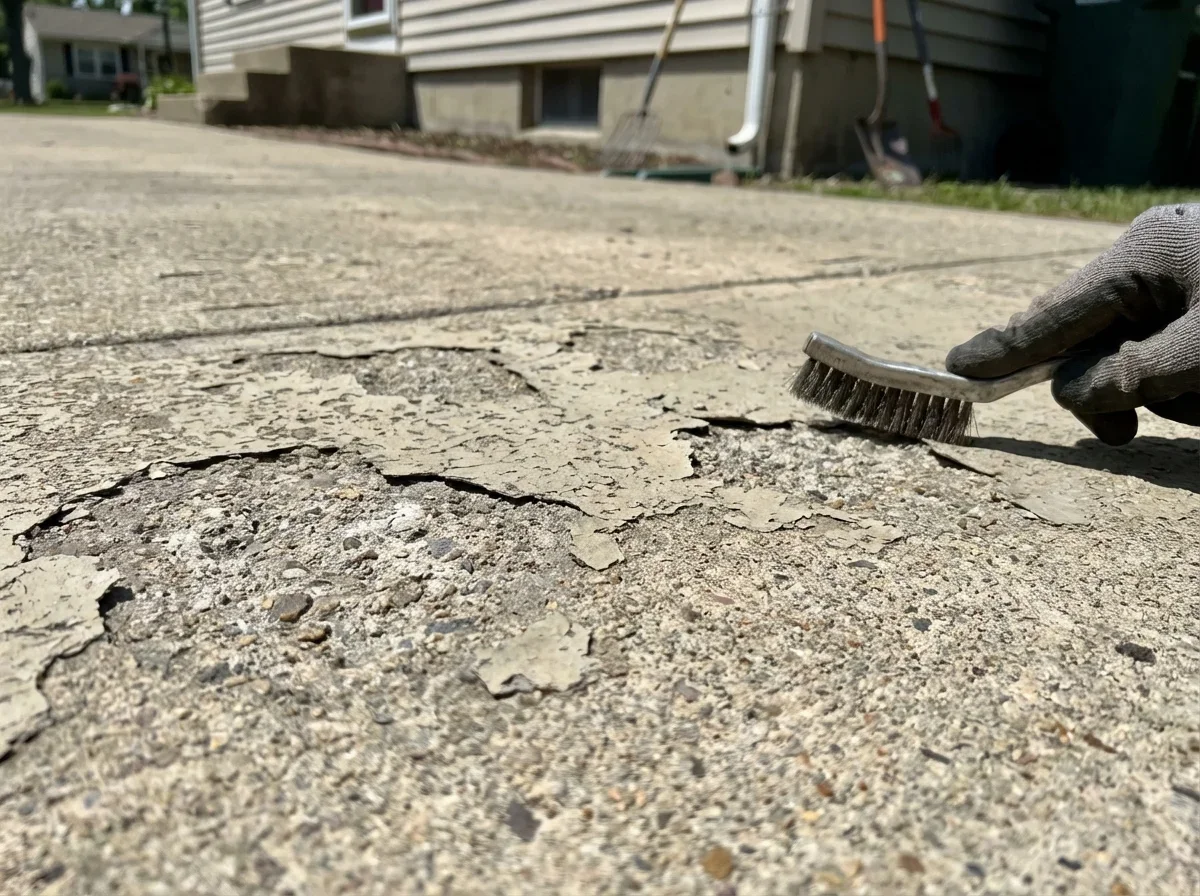
Spalling is the flaking, peeling, or chipping of a concrete surface. It happens when the top layer separates from the slab underneath, exposing the rough aggregate below. You might also hear it called scaling, delamination, or flaking — they all describe slightly different stages of the same basic problem.[1]
It usually starts small — a quarter-sized chip here, a rough patch there. But each freeze-thaw cycle makes it worse, and once the surface is compromised, water gets in more easily, which accelerates the damage cycle.
Why Concrete Spalls in Wisconsin
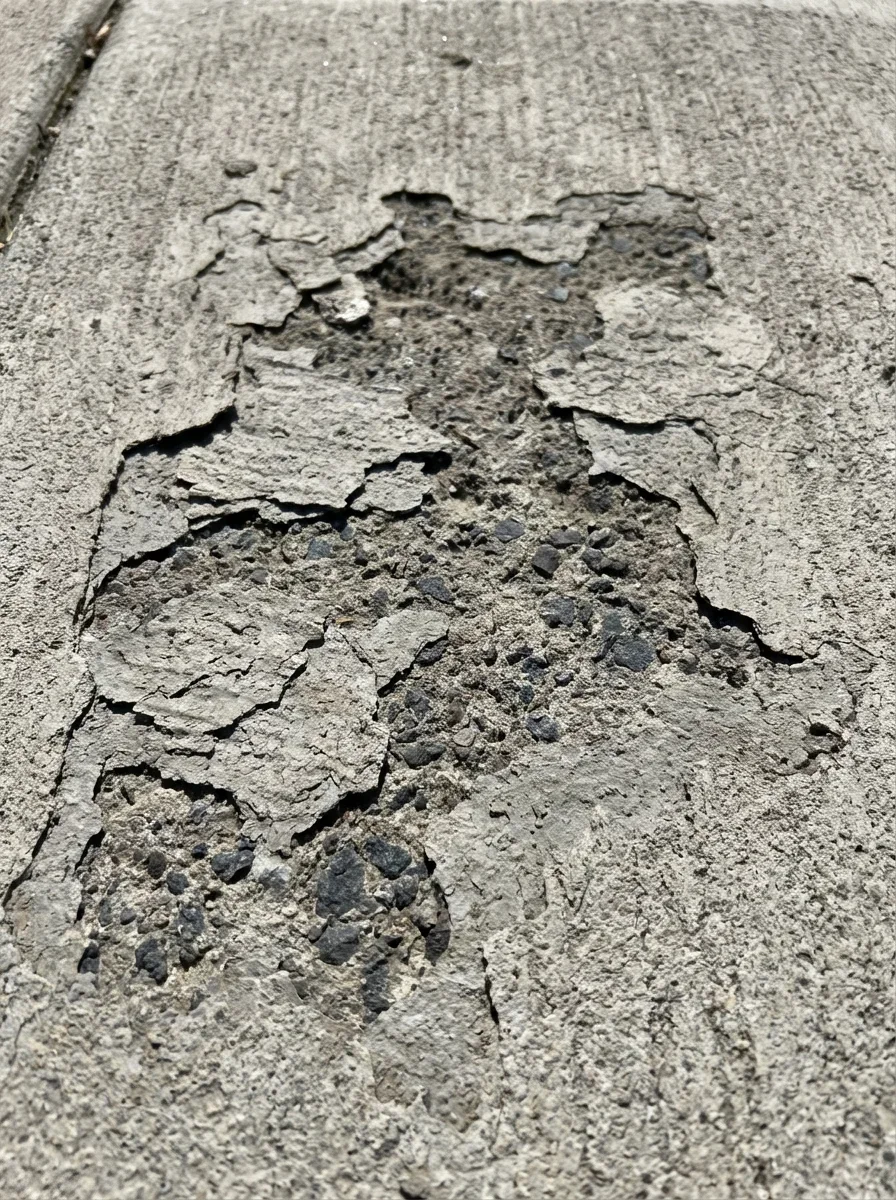
Wisconsin is particularly tough on concrete surfaces. The combination of deep freezes, rapid temperature changes, and heavy salt use creates near-perfect conditions for spalling.
Freeze-Thaw Damage
Water trapped in the concrete's pore structure expands about 9% when it freezes. That internal pressure pushes against the surface layer. After enough cycles — and Wisconsin gets plenty — the surface starts to break away.[2]
Concrete with proper air entrainment handles this much better. Air-entrained concrete contains microscopic bubbles that give expanding water somewhere to go, reducing internal pressure. If your concrete wasn't air-entrained during mixing, it's significantly more vulnerable.
Deicing Salt Damage
Road salt and deicing chemicals are rough on concrete. They increase the number of freeze-thaw cycles the surface experiences by repeatedly melting and refreezing. Some chemical deicers also react with the concrete itself, causing additional deterioration.[3]
New concrete is especially vulnerable. Most contractors recommend waiting at least one full winter before applying any chemical deicer to a new slab.
Poor Finishing Practices
Overworking the surface during finishing — adding too much water, troweling while bleed water is still present, or finishing too early — can create a weak surface layer. That thin, weakened top is the first thing to go when freeze-thaw cycles start.
Inadequate Curing
Concrete that dries out too fast during the first week after placement doesn't develop full strength at the surface. This is a bigger issue with late-season pours where temperatures drop before the concrete has properly cured.
Common Spalling Triggers in Wisconsin:
- Freeze-thaw cycling (50+ cycles per typical winter)
- Deicing salt application, especially in the first year
- Missing or insufficient air entrainment in the concrete mix
- Surface finishing while bleed water is present
- Insufficient curing time or improper curing methods
- Substandard concrete mix with too high a water-cement ratio
How Bad Is It? Assessing the Damage
The right fix depends on how deep the damage goes and how much area is affected.
Surface Scaling (Mild)
The top 1/16 to 1/8 inch is flaking, but the concrete underneath is still hard and solid. This is mostly cosmetic and can usually be addressed with a resurfacing product or overlay.
Moderate Spalling
Chips are 1/4 to 1/2 inch deep, exposing aggregate in spots. The damage may cover several areas but the slab is still structurally sound. Resurfacing can work here, but the prep work is more involved.
Severe Delamination
Large sections are breaking away, the underlying concrete may be soft or crumbly, and you can hear a hollow sound when you tap the surface. This usually means replacement is the most practical option.
Repair Options for Spalled Concrete
Concrete Resurfacing
A thin polymer-modified overlay is applied over the existing surface. It bonds to the sound concrete underneath and provides a new wear surface. Works well for mild to moderate spalling where the base slab is still solid.
Thickness: Typically 1/8 to 1/4 inch. Lifespan: 8-15 years with proper application.
Partial Depth Repair
Damaged concrete is chipped away to sound material, and a repair mortar is applied. This is more targeted than full resurfacing and works well for isolated areas of moderate to severe damage.
Full Replacement
When spalling is widespread, deep, or the original concrete had fundamental mix problems (no air entrainment, high water-cement ratio), replacement is the most cost-effective long-term solution. A new slab with a proper mix design and air entrainment will handle Wisconsin winters far better.
| Repair Method | Damage Level | Cost Range | Lifespan |
|---|---|---|---|
| Resurfacing overlay | Mild surface scaling | $3–$5/sq ft | 8-15 years |
| Partial depth repair | Moderate, isolated areas | $5–$10/sq ft | 10-15 years |
| Full replacement | Severe or widespread | $8–$15/sq ft | 25-30 years |
Preventing Spalling on New or Repaired Concrete
Prevention comes down to getting a few things right during installation and being smart about maintenance afterward.
During installation:
- Specify air-entrained concrete (5-7% air content for Wisconsin exposure conditions)
- Maintain a low water-cement ratio (0.45 or less)
- Never finish the surface while bleed water is present
- Cure properly — keep the surface moist for at least 7 days
Ongoing maintenance:
- Apply a penetrating concrete sealer every 2-3 years
- Avoid chemical deicers for the first winter after placement
- Use sand or kitty litter for traction instead of salt when possible
- Clear snow promptly to reduce standing water and repeated freeze-thaw cycles
Getting the concrete mix and installation right from the start is your best defense. A quality air-entrained mix with proper finishing and curing will stand up to decades of Wisconsin winters without surface problems.
Frequently Asked Questions
- Portland Cement Association. "Scaling Concrete Surfaces." cement.org. Accessed February 8, 2026.
- American Concrete Institute. "Guide to Durable Concrete — ACI 201.2R: Freezing and Thawing." concrete.org. Accessed February 8, 2026.
- Federal Highway Administration. "Deicing Chemicals and Concrete Durability." fhwa.dot.gov. Accessed February 8, 2026.