
Why Concrete Sinks
Concrete doesn't sink because the slab is failing. It sinks because the soil supporting it has changed. Your concrete is only as stable as the ground beneath it, and several things can cause that ground to shift.
Soil Settlement
When a home is built, the excavated area around the foundation gets backfilled with loose soil. That fill soil can take years — sometimes decades — to fully compact under its own weight. As it settles, any concrete poured on top goes with it.[1]
Water Erosion and Washout
Water is the number one enemy of a stable subgrade. Downspouts dumping water next to a sidewalk, poor grading that directs runoff toward slabs, or even a leaking underground pipe can wash away the soil supporting your concrete. You end up with a void underneath, and eventually the slab drops into it.
Freeze-Thaw Cycles
Wisconsin's frost line reaches 48 inches deep. When soil freezes, it expands and pushes slabs upward. When it thaws, the soil contracts — but the slab doesn't always settle back to its original position. Over many seasons, this creates uneven surfaces and gaps underneath the concrete.[2]
Organic Material Decomposition
Tree roots, buried stumps, or other organic material under a slab will decompose over time, leaving voids. This is especially common in newer developments where land was cleared but organic debris wasn't fully removed from the subgrade.
Signs Your Concrete Is Sinking
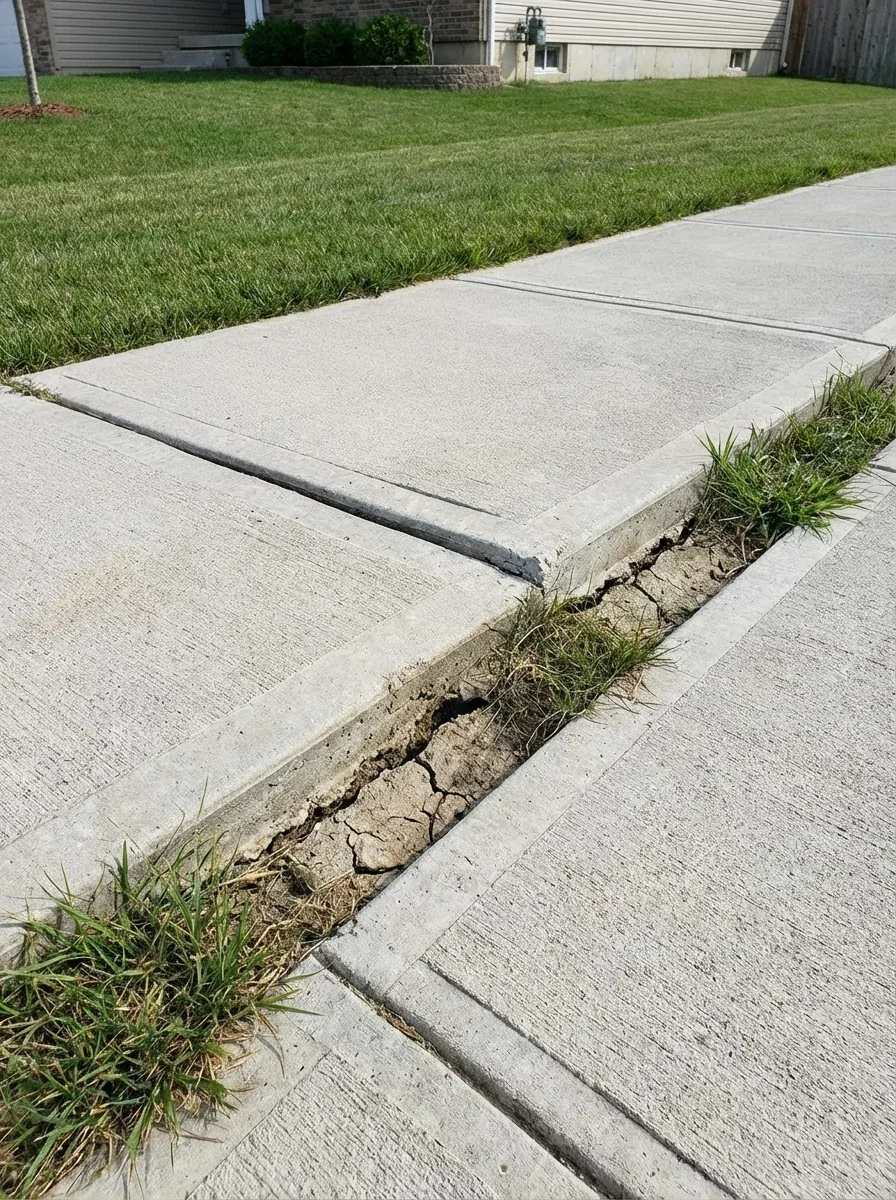
Some signs are obvious, but others sneak up on you.
- Visible gaps between the slab and an adjacent structure (house, garage, steps)
- Water pooling in areas that used to drain properly
- Uneven joints where one slab sits higher or lower than its neighbor
- Rocking or wobbling when you walk across a section
- Doors or gates that no longer close properly due to shifting adjacent slabs
Safety note: Uneven concrete creates trip hazards that can result in real liability for homeowners. The ADA considers any vertical displacement greater than 1/4 inch a trip hazard on public walkways — and many local codes apply similar standards to residential sidewalks.[3]
Fixing Sinking Concrete: Your Options
You have three basic approaches, and the right one depends on how bad the problem is and what caused it.
Mudjacking (Slabjacking)
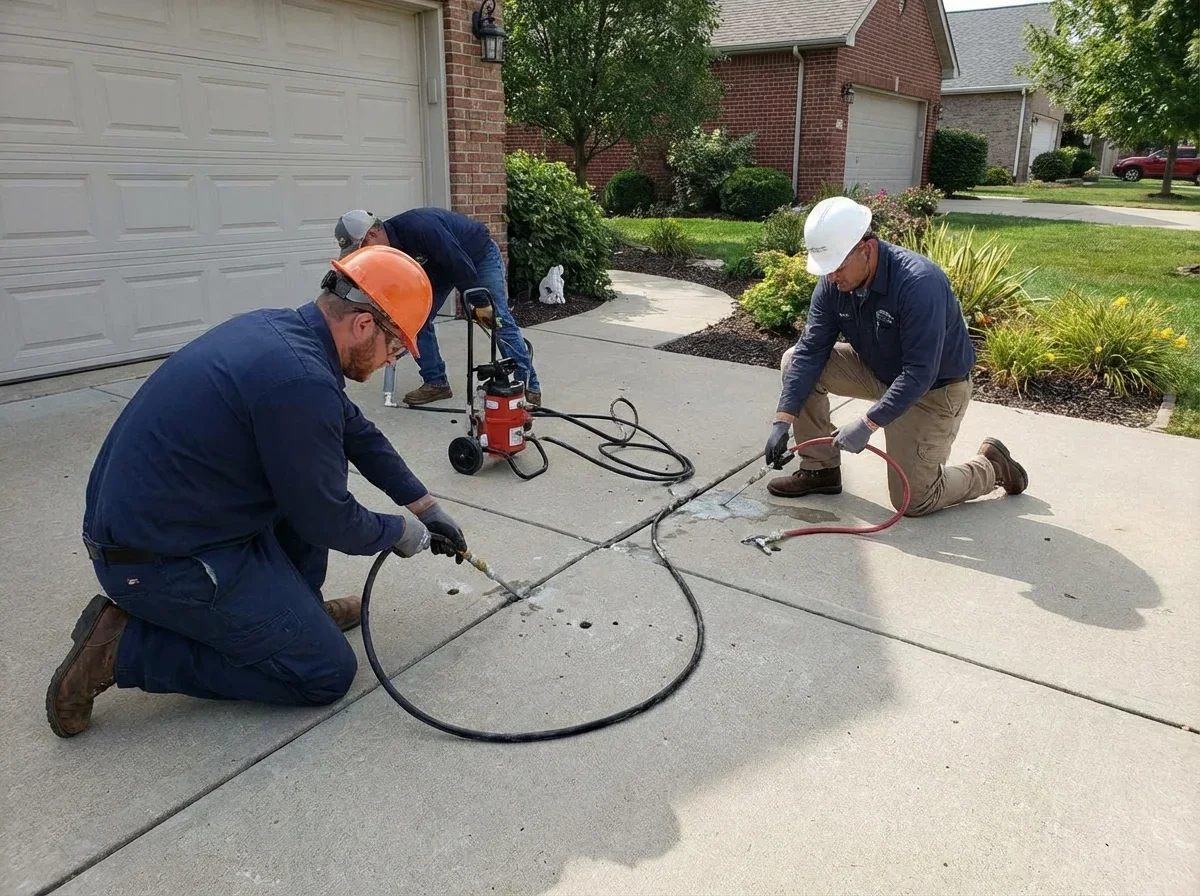
A crew drills small holes in the sunken slab and pumps a cement-based slurry underneath to lift it back to level. It's been used for decades and works well when the slab itself is in good shape.
Best for: Moderate sinking (1-4 inches), solid slabs without major cracking, driveways, sidewalks, and garage floors.
Cost: Typically 50-75% less than full replacement.
Polyurethane Foam Injection
Similar concept to mudjacking, but uses expanding polyurethane foam instead of cement slurry. The foam is lighter, cures faster (minutes instead of days), and requires smaller drill holes.
Best for: Areas where weight matters (over septic systems, near foundations), situations requiring fast cure time.
Full Replacement
Tear out the old slab, address the underlying soil problem, recompact the subgrade, and pour new concrete.
Best for: Slabs with extensive cracking or deterioration, situations where the subgrade needs major rework, very old concrete.
| Method | Typical Cost | Cure Time | Slab Condition Required | Longevity |
|---|---|---|---|---|
| Mudjacking | $500–$1,500 | 24-48 hours | Good — intact slab | 5-10 years |
| Foam Injection | $800–$2,000 | 15-30 minutes | Good — intact slab | 10-15 years |
| Full Replacement | $3,000–$8,000+ | 7-14 days | Any | 25-30 years |
What Causes Repeat Sinking
Lifting a slab without fixing the root cause is like mopping a floor while the faucet's still running. If water drainage isn't corrected, the same erosion will wash out the fill material again.
Before any leveling work, make sure:
- Gutters and downspouts direct water at least 4-6 feet away from slabs
- Yard grading slopes away from the house and flatwork
- Any underground drainage issues (broken pipes, high water table) are addressed
- The fill material used is appropriate for your soil conditions
When to Act
Minor settling of 1/4 to 1/2 inch isn't unusual, especially in the first few years after construction. Keep an eye on it, but it's not an emergency.
Once displacement reaches 1/2 inch or more, it's worth getting a professional assessment. The longer you wait, the worse the problem gets — water finds its way into the gap, accelerates erosion, and the slab drops further. What starts as a $600 mudjacking job can turn into a $5,000 replacement if you let it go too long.
Frequently Asked Questions
- Portland Cement Association. "Subgrades and Subbases for Concrete Slabs." cement.org. Accessed February 8, 2026.
- University of Minnesota Extension. "Foundations, Basements, and Crawl Spaces." extension.umn.edu. Accessed February 8, 2026.
- U.S. Access Board. "ADA Standards for Accessible Design — Ground and Floor Surfaces." access-board.gov. Accessed February 8, 2026.