
Upfront Cost Comparison
Asphalt driveways typically cost $3-$5 per square foot installed, while concrete runs $6-$12 per square foot for a standard gray finish. For a typical two-car Wisconsin driveway (roughly 600 square feet), you’re looking at $1,800-$3,000 for asphalt versus $3,600-$7,200 for concrete.[1]
That price gap narrows if you factor in the full picture. Asphalt needs resealing every 2-3 years at $0.15-$0.25 per square foot. Over 20 years, those maintenance costs add up to $1,800-$3,000 — putting the total cost of ownership much closer together.
Durability and Lifespan
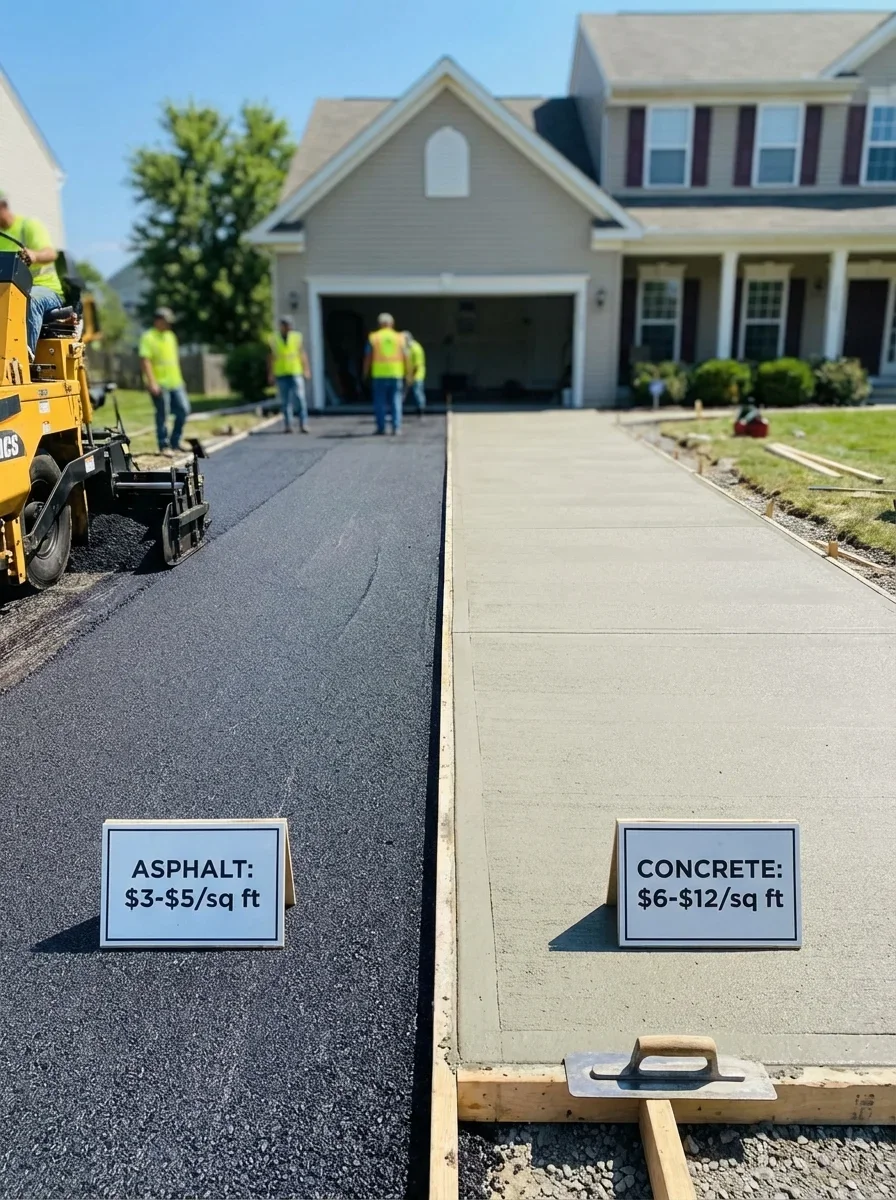
A properly installed concrete driveway lasts 25-30 years with minimal maintenance. Asphalt driveways typically last 15-20 years before needing a full replacement, though regular sealing can push that toward the higher end.[2]
Concrete’s longer lifespan is one of its strongest selling points. When you divide total cost by years of service, concrete often comes out cheaper on a per-year basis despite the higher upfront price.
| Factor | Concrete | Asphalt |
|---|---|---|
| Installed cost (per sq ft) | $6–$12 | $3–$5 |
| Lifespan | 25–30 years | 15–20 years |
| Maintenance frequency | Seal every 5–7 years (optional) | Seal every 2–3 years (required) |
| Annual maintenance cost | $50–$100 | $150–$300 |
| Winter salt damage | Susceptible if not air-entrained | Resistant to salt |
| Heat absorption | Stays cooler, lighter color | Absorbs heat, softens in extreme heat |
| Crack repair | More difficult, more visible | Easy hot-patch repair |
| Customization | Stamping, coloring, exposed aggregate | Limited to black/dark gray |
| Resale value impact | Higher perceived value | Standard/neutral |
Wisconsin Winter Performance
This is where the decision gets interesting for Wisconsin homeowners. Both materials handle cold differently, and neither is perfect.
Concrete’s biggest winter enemy is deicing salt. Standard rock salt (sodium chloride) can cause surface scaling on concrete — that flaky, pitting damage you see on older sidewalks. Air-entrained concrete resists this much better, which is why specifying 4,000 PSI air-entrained mix is essential for any Wisconsin driveway. Even with air entrainment, avoid using deicers during the first winter after installation.[3]
Asphalt handles salt without any surface damage, which is a genuine advantage in Wisconsin. However, asphalt is more susceptible to frost heaving — the ground movement caused by our freeze-thaw cycles that can crack and buckle the surface from below.
Maintenance Requirements
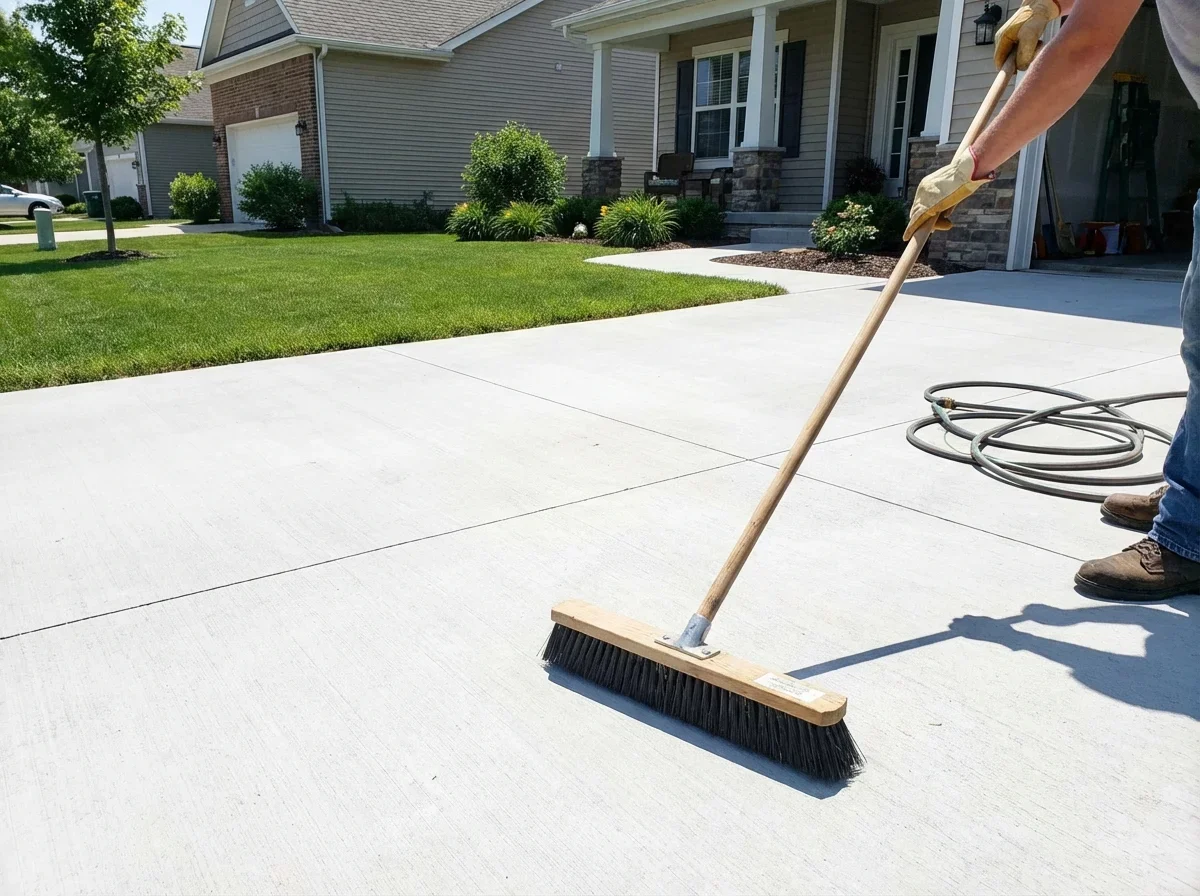
Concrete maintenance is relatively simple: clean it once or twice a year, apply a penetrating sealer every 5-7 years if you want extra protection, and fill any cracks before winter. It’s a low-effort material once it’s installed.
Asphalt demands more attention. Sealcoating every 2-3 years is essential for longevity — skip it and you’ll see cracking and deterioration much faster. Asphalt also requires crack filling as soon as damage appears, because water infiltration during freeze-thaw cycles will turn a small crack into a pothole quickly.
What Wisconsin homeowners often overlook: Concrete driveways should not be sealed for at least 28 days after pouring, and many contractors recommend waiting a full year. Asphalt driveways need 6-12 months before the first sealcoat. Rushing either process causes more harm than good.
Climate Factors Specific to Wisconsin
Wisconsin’s frost line sits at 48 inches — deeper than most of the country. Both concrete and asphalt driveways need a proper gravel base (minimum 4-6 inches) to handle ground movement. Without it, neither material will last.
Our temperature range from -20°F winter lows to 90°F+ summer highs puts extreme stress on both materials. Concrete handles the full range well as long as it’s properly air-entrained. Asphalt can soften in extreme heat, which is less of an issue in Wisconsin than in southern states but still worth knowing.
When to Choose Concrete
Concrete makes the most sense if you’re planning to stay in your home long-term and want a low-maintenance driveway with design options. If you want stamped, colored, or exposed aggregate finishes, concrete is your only real option. It also adds more to your home’s resale value.
Choose concrete if you prioritize longevity over upfront cost, want a customized look, or plan to stay in the home for 15+ years.
When to Choose Asphalt
Asphalt is the practical choice when budget is the primary concern and you need a functional driveway at the lowest possible upfront cost. It’s also worth considering if you’re in a rural area with a very long driveway — the cost difference per square foot multiplied over hundreds of feet becomes significant.
Choose asphalt if you’re working with a tight budget, have a very large driveway area, or plan to sell the property within 10 years.
Frequently Asked Questions
- HomeAdvisor / Angi. "Concrete vs. Asphalt Driveways: Cost Comparison." angi.com. Accessed February 8, 2026.
- National Association of Home Builders. "Life Expectancy of Housing Components." nahb.org. Accessed February 8, 2026.
- Portland Cement Association. "Deicing Chemicals and Concrete." cement.org. Accessed February 8, 2026.