
What Rebar Actually Does
Rebar (short for reinforcing bar) is steel rod embedded in concrete to add tensile strength. Concrete is incredibly strong in compression — it handles weight on top of it beautifully. But it’s weak in tension, meaning it cracks easily when forces try to pull or bend it.[1]
Rebar handles the tension. When the ground shifts, heaves from frost, or the slab flexes under heavy loads, the steel keeps the concrete from cracking apart. It doesn’t prevent cracks entirely — control joints handle that — but it holds cracked sections together so they don’t separate and become a tripping hazard or structural problem.
When You Need Rebar
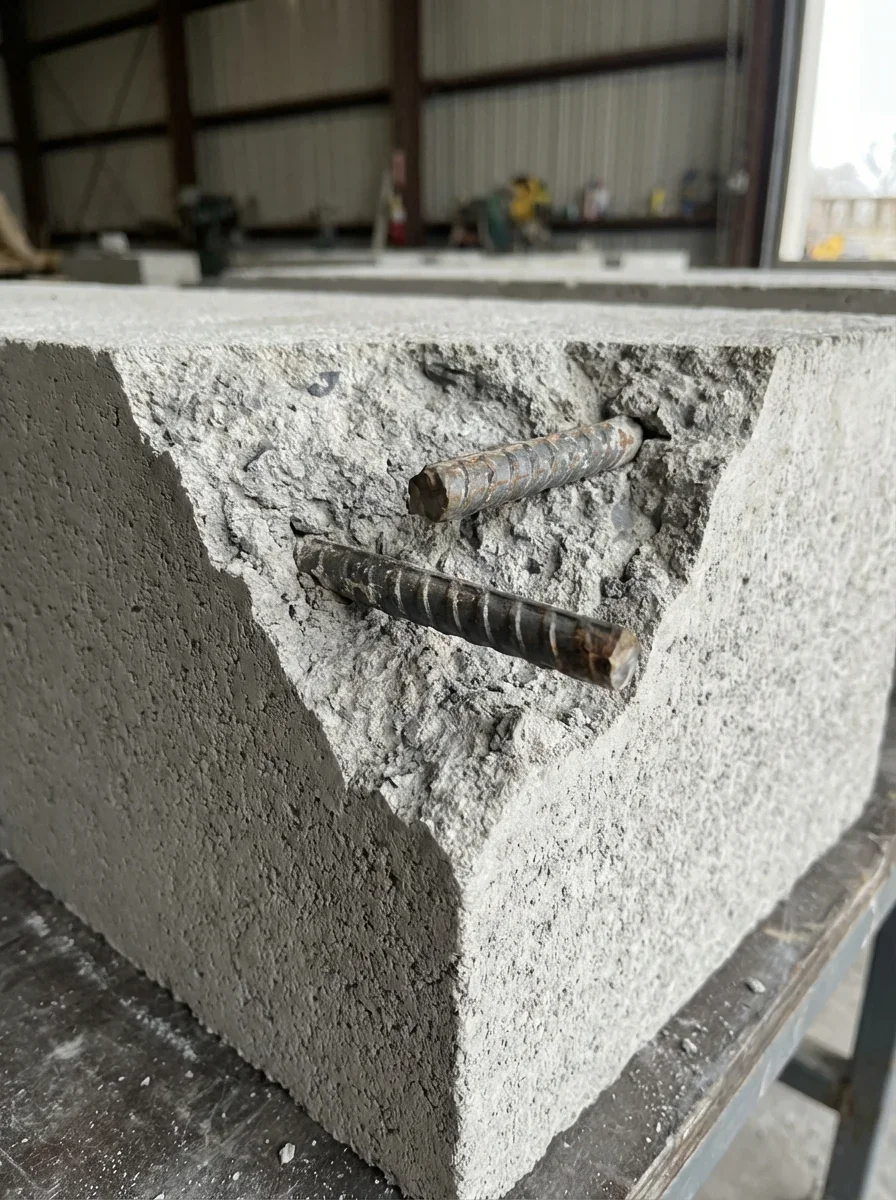
Not every concrete project requires rebar, but some absolutely do. The deciding factors are slab thickness, expected load, and soil conditions.
Rebar is recommended or required for:
- Driveways that will support heavy vehicles (trucks, RVs, trailers)
- Any slab thicker than 5 inches
- Concrete that spans over unstable or fill soil
- Structural slabs (garage floors, building foundations)
- Steps, retaining walls, and elevated slabs
- Any concrete in areas with significant frost heave — including most of Wisconsin
- Slabs wider than 15 feet without intermediate control joints
For standard residential driveways in Wisconsin, most contractors pour 4-inch slabs with either welded wire mesh or rebar on 18-inch centers. If your driveway will handle anything heavier than passenger vehicles, bump to a 5-inch slab with #4 rebar on 12-inch centers.
Wire Mesh vs Rebar
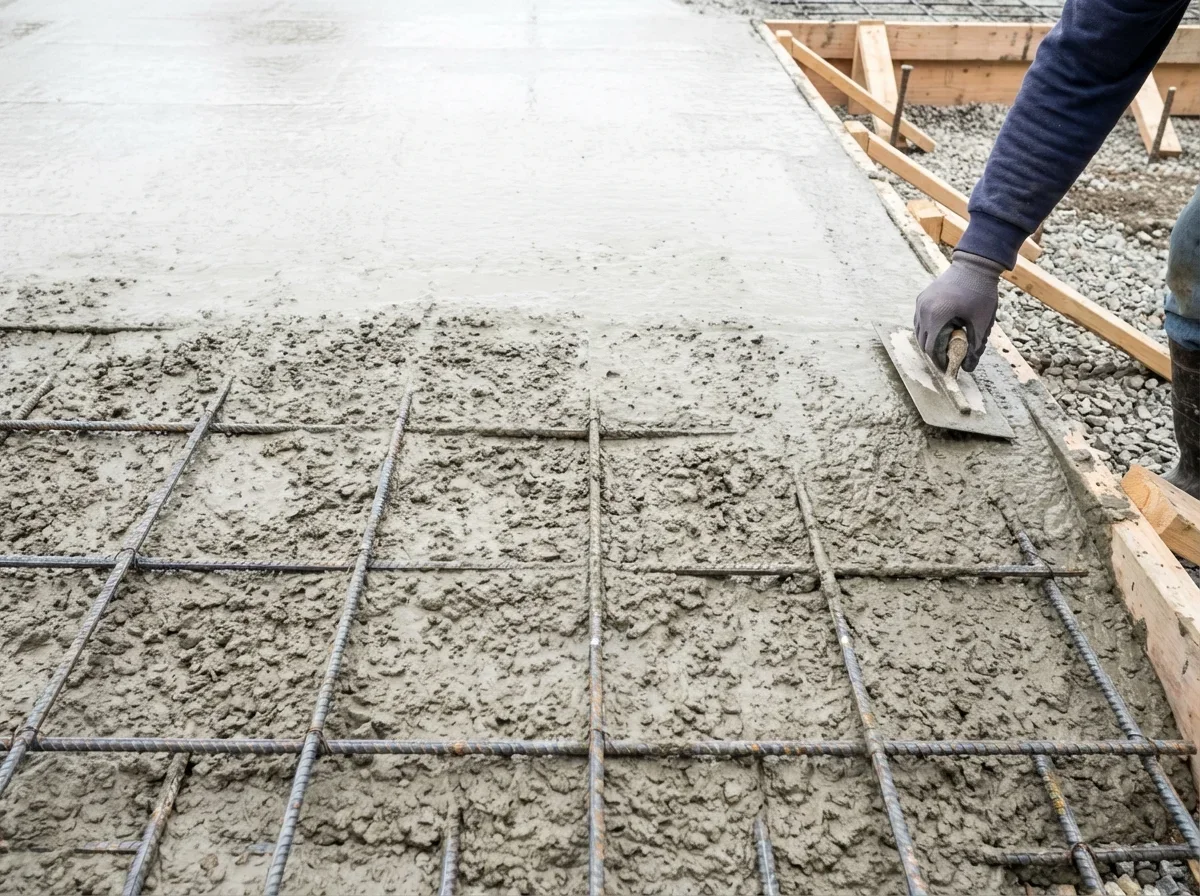
Wire mesh (welded wire fabric, or WWF) is the lighter-duty alternative to rebar. It’s a grid of thin steel wire that provides crack control for standard residential slabs.[2]
For a typical 4-inch patio, sidewalk, or light-duty driveway, 6x6 W1.4/W1.4 welded wire mesh is standard and perfectly adequate. It controls cracking caused by shrinkage and minor ground movement without the cost and labor of rebar installation.
| Feature | Rebar | Wire Mesh | Fiber Reinforcement |
|---|---|---|---|
| Best for | Heavy loads, thick slabs, structural | Standard residential, patios, sidewalks | Shrinkage crack control |
| Typical use | Driveways (heavy), foundations, walls | Driveways (standard), patios, walkways | Supplement to mesh or rebar |
| Tensile strength | High — holds cracked sections together | Moderate — controls minor cracking | Low — reduces surface cracking |
| Cost per sq ft | $0.50–$1.50 | $0.15–$0.35 | $0.10–$0.25 (added to mix) |
| Installation | Must be placed on chairs before pour | Laid flat, pulled up during pour | Mixed directly into concrete |
| Wisconsin recommendation | Heavy-use driveways, any slab 5"+ | Standard 4" residential slabs | Supplement only, not a replacement |
The 4-Inch Slab Question
"Do you need rebar for a 4-inch slab?" is one of the most common questions homeowners ask. The short answer: you don’t strictly need rebar, but you do need some form of reinforcement.
For a standard 4-inch residential slab in Wisconsin, welded wire mesh is the minimum. The freeze-thaw cycles here create ground movement that will crack an unreinforced slab within a few years. Wire mesh won’t stop the cracks, but it keeps them tight and prevents sections from shifting apart.
If your 4-inch slab will carry vehicle traffic, upgrading to rebar on 18-inch centers is worth the modest cost increase. The added strength helps the slab handle both the vehicle loads and the frost heaving that Wisconsin soil is known for.
Fiber Reinforcement
Fiber-reinforced concrete uses synthetic or steel fibers mixed directly into the concrete. It’s become popular as a supplement to traditional reinforcement, but it doesn’t replace rebar or wire mesh for structural applications.[3]
Fibers reduce plastic shrinkage cracking — those small surface cracks that appear as concrete cures. They’re a good addition to any pour, but they don’t provide the structural tensile strength that rebar delivers. Think of fiber as extra insurance for the surface, not a substitute for the steel underneath.
Wisconsin-Specific Considerations
Wisconsin’s 48-inch frost line means the ground under your slab moves. A lot. Every winter, moisture in the soil freezes, expands, and pushes upward. Every spring, it thaws and settles back down. This annual cycle puts enormous stress on concrete.
For any slab in Wisconsin, reinforcement isn’t optional — it’s essential. The only question is which type. Standard residential work (patios, walkways, light-duty driveways) does fine with wire mesh. Anything carrying significant weight or spanning problem soil needs rebar.
What to Tell Your Contractor
Ask your contractor specifically what reinforcement they plan to use and why. A good contractor will match the reinforcement to the project — not just default to the cheapest option or the most expensive one.
If a contractor tells you reinforcement isn’t necessary for a driveway in Wisconsin, get a second opinion. The freeze-thaw stress alone makes some form of reinforcement a best practice for virtually any slab in this climate.
- American Concrete Institute. "Guide to Concrete Floor and Slab Construction (ACI 302.1R)." concrete.org. Accessed February 8, 2026.
- Concrete Reinforcing Steel Institute. "Residential Guide to Reinforced Concrete." crsi.org. Accessed February 8, 2026.
- Portland Cement Association. "Fiber-Reinforced Concrete." cement.org. Accessed February 8, 2026.