
Seasonal Maintenance Calendar
Concrete care follows the seasons in Wisconsin. Each time of year brings specific tasks that protect your investment from the unique stresses of our climate.
| Season | Tasks | Why It Matters |
|---|---|---|
| Spring (April–May) | Inspect for winter damage, clean surface, fill any new cracks | Catch freeze-thaw damage early before it spreads |
| Summer (June–August) | Apply sealer if due, deep clean stains, address drainage issues | Best conditions for sealer application and curing |
| Fall (September–October) | Final crack filling before winter, clear debris from joints, clean gutters near concrete | Prep for freeze-thaw season while you still can |
| Winter (November–March) | Use concrete-safe deicers only, shovel promptly, avoid metal blades on concrete | Prevent salt scaling and mechanical surface damage |
Sealing Your Concrete
Sealing is the single most effective thing you can do to extend your concrete’s life. A quality penetrating sealer blocks moisture from entering the concrete’s pores, which is critical in Wisconsin where trapped moisture freezes and causes spalling.[1]
When to seal: Apply a penetrating sealer every 5-7 years for driveways and every 3-5 years for high-traffic areas or concrete exposed to heavy salt. New concrete should cure for at least 28 days before the first application — many contractors recommend waiting a full year.
What type to use: Penetrating sealers (silane or siloxane-based) are best for Wisconsin exterior concrete. They soak into the surface and protect from within, unlike film-forming sealers that sit on top and can peel or trap moisture. Look for products rated for freeze-thaw resistance.
How to apply: Clean the surface thoroughly, let it dry completely, and apply with a pump sprayer or roller on a day between 50°F and 85°F with no rain in the forecast for 24 hours. Two thin coats are better than one heavy coat.
Crack Repair
Cracks happen — even in well-installed concrete. Control joints are designed to direct cracking to predictable locations, but random cracks still appear. The key is filling them before Wisconsin winter turns a hairline crack into a chunk of missing concrete.
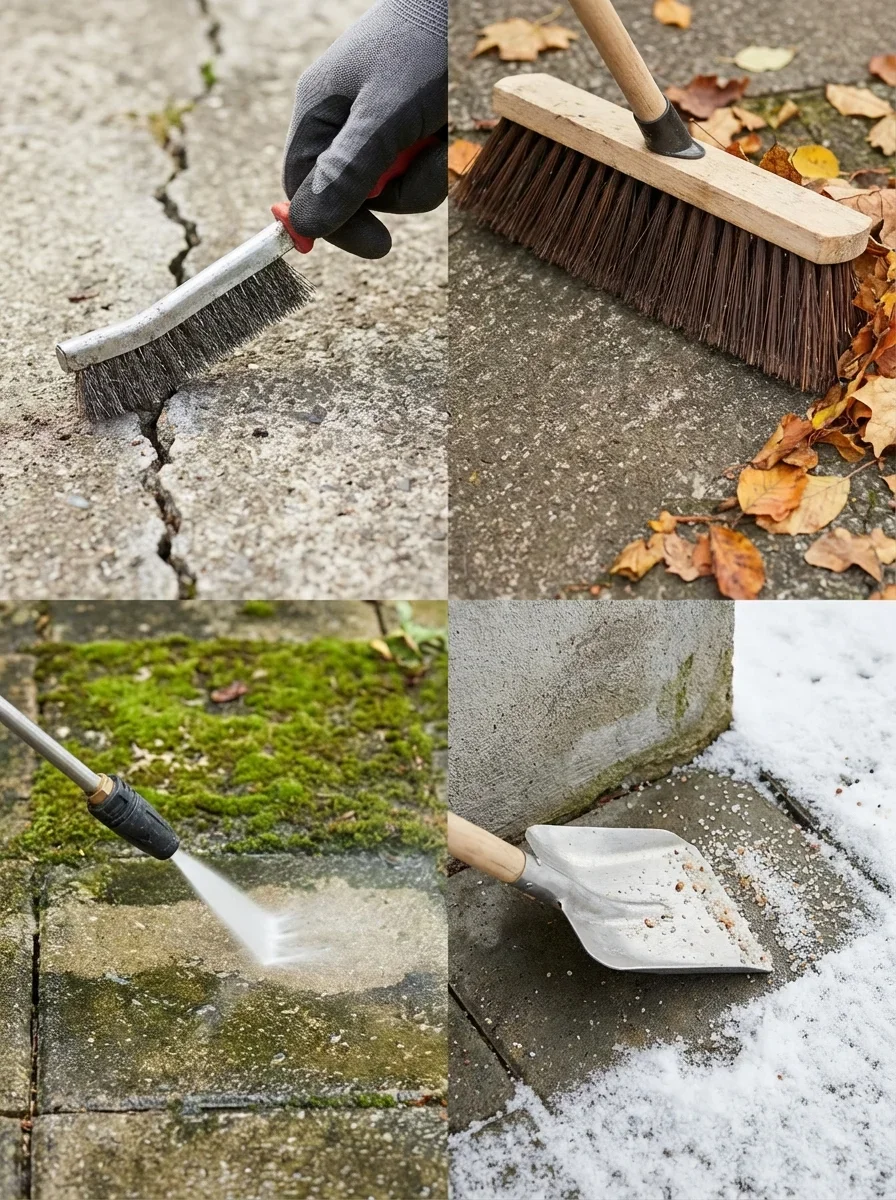
For cracks up to 1/4 inch wide, use a flexible polyurethane or silicone concrete crack filler. Clean out loose debris with a wire brush, fill the crack to just below the surface, and smooth it flat. For cracks wider than 1/4 inch, use a backer rod (foam rope) to fill the depth, then apply filler on top.[2]
Address cracks in fall before the first freeze. Water that gets into unfilled cracks will freeze, expand, and make every crack worse by spring.
Winter Care for Wisconsin Concrete
Winter is when concrete takes the most abuse in Wisconsin. Your approach to deicing and snow removal directly impacts how long your concrete lasts.
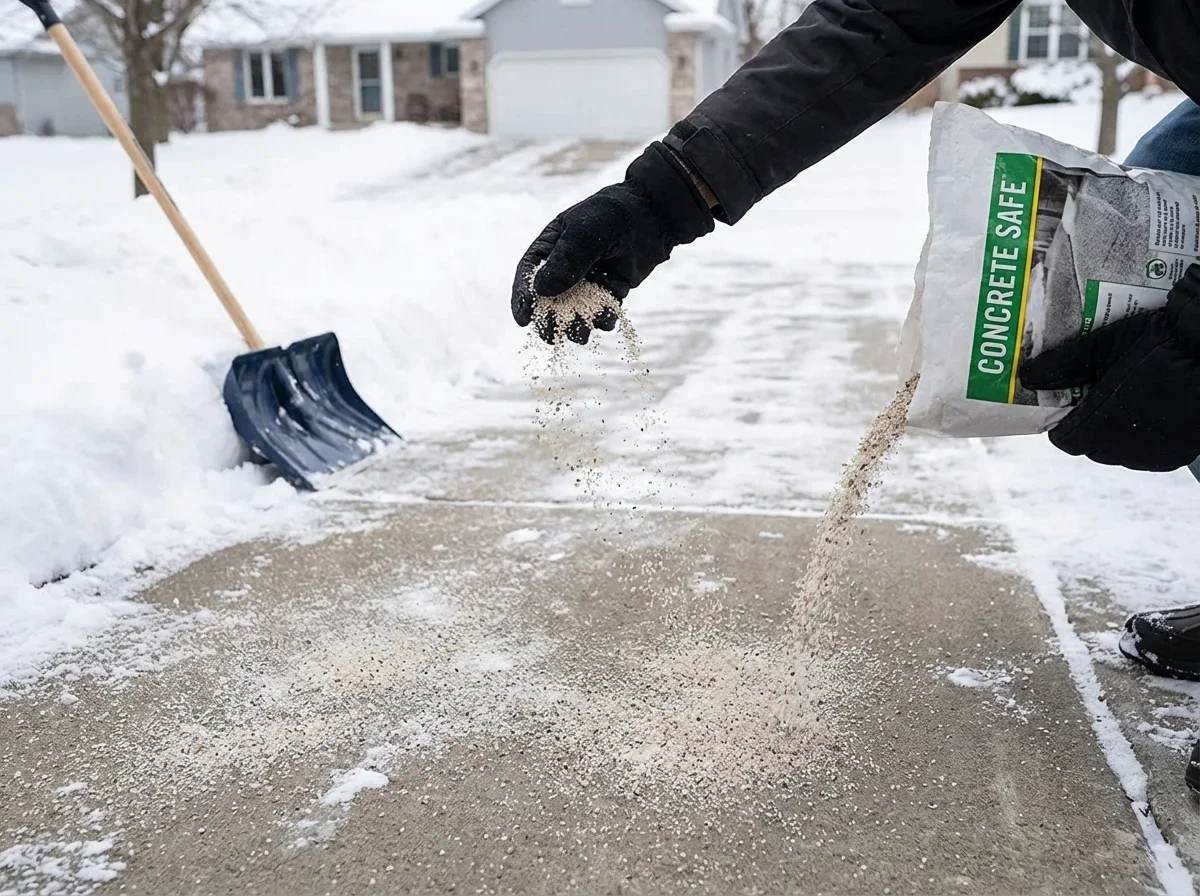
Deicers ranked for concrete safety: Calcium magnesium acetate (CMA) and sand are safest. Calcium chloride is acceptable for established concrete. Rock salt (sodium chloride) causes surface scaling over time. Ammonium nitrate and ammonium sulfate fertilizer-based deicers will destroy concrete — never use them.
First-winter rule: Do not use any chemical deicers on concrete less than one year old. Use sand for traction instead. New concrete hasn’t fully cured and is extremely vulnerable to scaling from deicing chemicals.[3]
Snow removal: Shovel or use a plastic-edge snow blower. Metal shovels and plow blades can chip and gouge the surface. Remove snow promptly — letting it melt and refreeze creates the ice layer that leads to heavy deicer use.
Cleaning Concrete
Regular cleaning prevents staining from becoming permanent and keeps the surface looking good. Different stains need different approaches.
General cleaning: A pressure washer at 2,500-3,000 PSI handles most dirt, mildew, and light staining. Use a wide-angle tip (25 or 40 degrees) and keep the nozzle 6-8 inches from the surface. Closer than that risks etching the concrete.
Oil and grease: Apply an absorbent (kitty litter or baking soda) immediately to fresh spills. For set-in stains, use a degreaser formulated for concrete. Let it sit for 15-20 minutes before scrubbing and rinsing.
Rust stains: Use oxalic acid-based rust remover. Avoid muriatic acid — it works but can etch and weaken the concrete surface.
Protecting Concrete Edges and Joints
Edges and control joints are the most vulnerable parts of any slab. Edges chip when hit by lawn mowers, snowplows, or heavy objects. Joints collect debris that holds moisture against the concrete.
Keep control joints clean by blowing out debris in spring and fall. If the original joint sealant has failed, re-caulk with a self-leveling polyurethane sealant rated for exterior use. This keeps water from getting underneath the slab through the joints.
Protect exposed edges — especially driveway aprons — by keeping soil, mulch, and sod from piling against them. Constant moisture contact on concrete edges accelerates deterioration.
When to Call a Professional
Most concrete maintenance is DIY-friendly, but some situations call for professional help. If you’re seeing widespread scaling, major cracks (over 1/2 inch), slab settlement, or water pooling in new areas, a concrete contractor can assess whether repair or replacement makes more sense.
Professional concrete resurfacing can restore a rough surface without full replacement. Professional crack injection handles structural cracks that go through the full slab thickness. Both options cost a fraction of a full tear-out and are worth exploring before committing to replacement.
- National Ready Mixed Concrete Association. "Concrete in Practice: Sealing Concrete Flatwork." nrmca.org. Accessed February 8, 2026.
- Portland Cement Association. "Concrete Slab Surface Defects: Causes, Prevention, Repair." cement.org. Accessed February 8, 2026.
- American Concrete Institute. "Guide to Durable Concrete (ACI 201.2R)." concrete.org. Accessed February 8, 2026.