
Average Lifespan by Project Type
Different concrete installations face different stresses, which means different lifespans. A patio that only handles foot traffic will outlast a driveway that takes vehicle weight and road salt exposure every winter.
| Project Type | Expected Lifespan | Key Factors |
|---|---|---|
| Driveway | 25–30 years | Vehicle weight, salt exposure, reinforcement quality |
| Patio | 25–30 years | Minimal stress, mainly weather exposure |
| Sidewalk | 25–40 years | Light foot traffic, municipal salt exposure |
| Garage floor | 30–40 years | Sheltered from weather, vehicle loads |
| Foundation | 50–100+ years | Below-grade, stable temperature, waterproofing quality |
| Steps | 20–25 years | High salt exposure, freeze-thaw stress on edges |
These numbers assume proper installation with adequate sub-base preparation, air-entrained concrete, and appropriate reinforcement. A corner-cutting installation might last half as long.
What Determines Concrete Lifespan
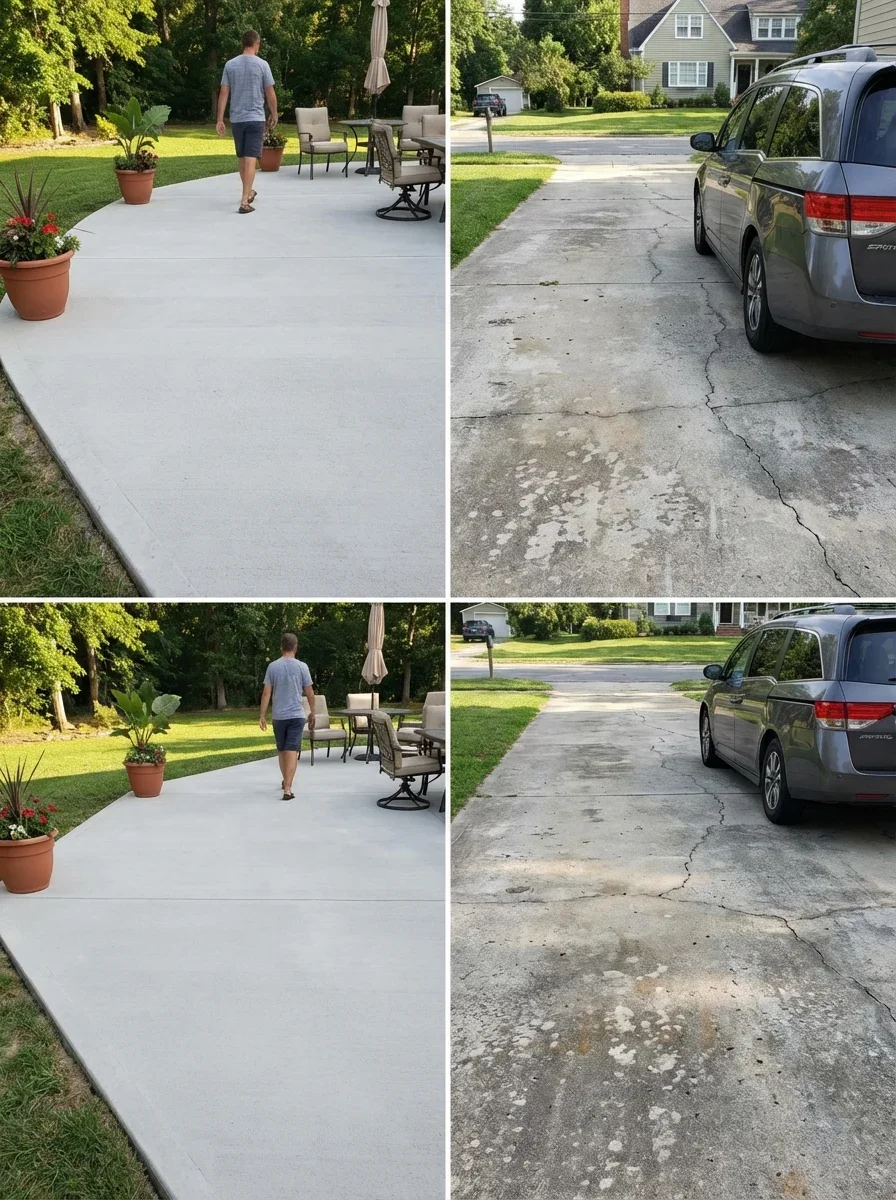
The lifespan clock starts ticking the day concrete is poured, and several factors determine how fast it runs.
Mix quality is the foundation of durability. In Wisconsin, you want a minimum 4,000 PSI air-entrained mix for any exterior flatwork. Air entrainment creates microscopic bubbles in the concrete that give water room to expand when it freezes — without it, freeze-thaw cycles will destroy the surface within a few years.[1]
Sub-base preparation matters almost as much as the concrete itself. A proper 4-6 inch compacted gravel base prevents settling, provides drainage, and reduces frost heave. Concrete poured directly on clay soil — common in Wisconsin — will crack and shift as the ground moves.
Thickness and reinforcement determine how the slab handles load stress. A 4-inch slab with wire mesh handles residential foot and vehicle traffic. Thicker slabs with rebar handle heavier loads and resist cracking longer.
How Wisconsin Weather Affects Longevity
Wisconsin is uniquely tough on concrete. The combination of deep frost lines (48 inches), frequent freeze-thaw cycles, and heavy deicing salt use puts more stress on concrete than most other climates in the country.[2]
A typical Wisconsin winter puts concrete through 30-50 freeze-thaw cycles. Each cycle forces water in the concrete’s pores to expand and contract. Without air entrainment, this causes spalling — the surface layer flaking and pitting that makes old concrete look terrible.
Road salt amplifies the damage. Sodium chloride deicers create a scaling effect on concrete surfaces, especially during the first winter after installation. This is why reputable Wisconsin contractors specify air-entrained concrete and recommend avoiding deicers for the first year.
Signs Your Concrete Needs Replacement
Concrete doesn’t fail all at once — it gives you warning signs. Knowing what to look for helps you decide between repair and replacement.
Repair if you see:
- Hairline cracks less than 1/4 inch wide
- Minor surface scaling in isolated areas
- Small spalling patches that haven’t spread
- Staining or discoloration
- Single control joint that has separated slightly
Replace when you see:
- Cracks wider than 1/2 inch or cracks that are growing
- Widespread surface scaling across 30%+ of the slab
- Sections that have heaved, sunk, or tilted noticeably
- Crumbling edges or corners
- Water pooling in new areas (indicates sub-base failure)
- Multiple patches that keep failing
How Maintenance Extends Lifespan
The difference between a 15-year driveway and a 30-year driveway is often just maintenance. Sealing, crack repair, and proper winter care can dramatically extend concrete’s useful life.[3]
Applying a penetrating sealer every 5-7 years protects the surface from moisture infiltration, salt damage, and staining. It’s a few hours of work that adds years to your concrete’s lifespan. Fill cracks as soon as they appear — even small ones — because water gets in, freezes, and turns a hairline crack into a major split over one Wisconsin winter.
When to Resurface vs Replace
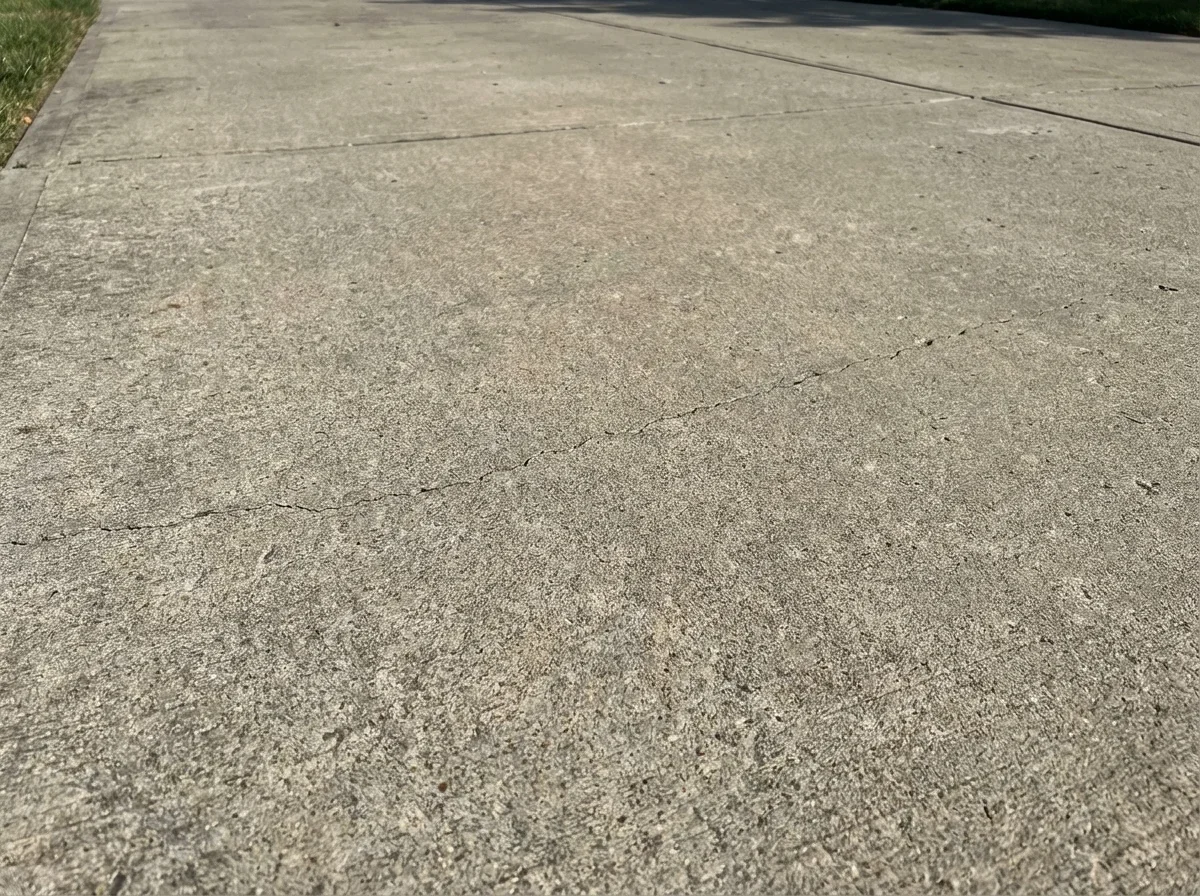
If your concrete is structurally sound but looks rough on the surface, resurfacing might save you the cost of a full replacement. A concrete overlay — a thin layer of new concrete bonded to the existing slab — can add 10-15 years of life at roughly one-third the cost of tearing out and replacing.
Resurfacing works when the existing slab is stable, level, and free of major cracks. If the sub-base has failed (uneven settling, major heaving), no overlay will fix the underlying problem. You’ll need to start fresh with proper excavation and sub-base work.
- Portland Cement Association. "Durability of Concrete." cement.org. Accessed February 8, 2026.
- University of Wisconsin-Madison Extension. "Concrete and Cold Weather." fyi.extension.wisc.edu. Accessed February 8, 2026.
- National Ready Mixed Concrete Association. "Concrete in Practice: Sealing Concrete." nrmca.org. Accessed February 8, 2026.