
The Ideal Temperature Range
Concrete cures best when air temperatures stay between 50°F and 85°F.[1] In Wisconsin, that typically means mid-April through mid-October — though the shoulder months require extra precautions. The concrete itself needs to be at least 50°F when it's placed, and the ground temperature matters just as much as the air.
Frozen ground is an absolute deal-breaker. If the sub-base is frozen, the concrete will settle unevenly as the ground thaws. Most Wisconsin contractors won't pour on frozen ground regardless of what the air temperature reads.
Spring Pouring: Late April Through May
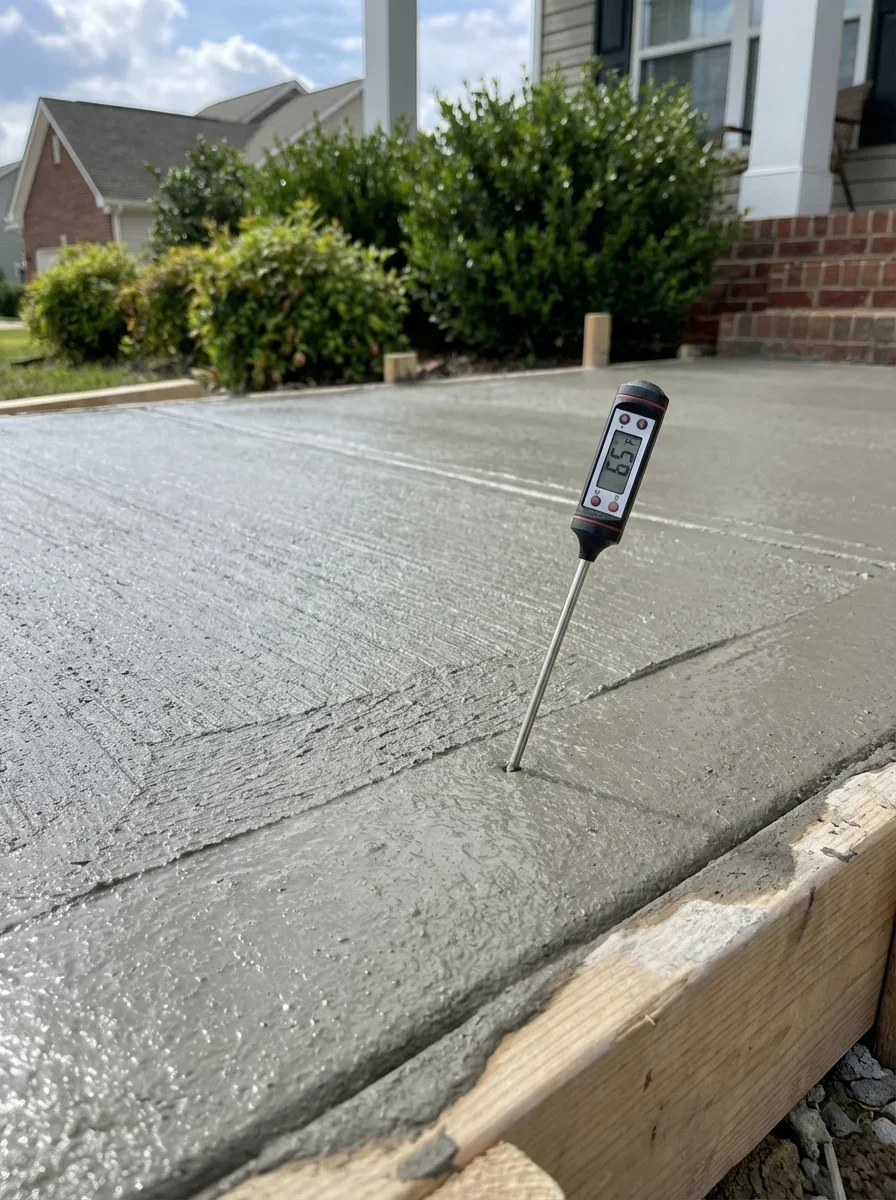
Spring is popular for concrete work in Wisconsin, but it comes with a catch: unpredictable weather. April temperatures in the Fox Valley can swing from 35°F at night to 65°F by afternoon. Those cold nights are dangerous for fresh concrete that hasn't fully cured.
The ground also tends to be saturated from snowmelt and spring rain. A good contractor will check soil conditions before pouring — if the sub-base is soggy, they'll push the date back rather than pour on mud. Compacted, dry gravel is essential for a slab that lasts.
Summer Pouring: June Through August
Summer is prime concrete season in Wisconsin. Warm temperatures, long days, and predictable weather make for ideal curing conditions. Most contractors are booked solid during these months, so plan ahead — booking 4-6 weeks in advance isn't unusual for summer pours.
The main risk during summer is extreme heat. When temperatures climb above 90°F, concrete sets faster than the finishing crew can work it. Hot weather also increases the risk of plastic shrinkage cracks — those spiderweb-like surface cracks that appear within hours of the pour.[2]
| Season | Months | Pros | Cons |
|---|---|---|---|
| Early Spring | March–April | Beat the rush, lower prices | Frost risk, wet ground, short work days |
| Late Spring | May–June | Warming temps, good curing | Contractor schedules filling up |
| Summer | July–August | Best curing conditions, long days | Heat cracking risk, peak pricing, long wait times |
| Early Fall | September–October | Cooling temps, less demand | Shorter days, early frost possible |
| Late Fall | November | Last chance before winter | Cold nights, freeze risk, rushed timeline |
| Winter | December–March | Not recommended in Wisconsin | Frozen ground, poor curing, high failure risk |
Fall Pouring: September Through October
Fall is arguably the sweet spot for Wisconsin concrete work. Temperatures are moderate, the ground is typically dry and stable, and contractor schedules start opening up after the summer rush. Many professionals consider September and early October the best pouring conditions of the year.
The risk increases as you push into late October. Nighttime temperatures in the Fox Valley regularly dip below freezing by early November. Fresh concrete that freezes within the first 24 hours can lose up to 50% of its potential strength.[1] If you're pouring late in the season, insulating blankets are a must.
Cold Weather Concreting
The American Concrete Institute defines cold weather concreting as any period when average daily temperatures fall below 40°F for three consecutive days.[3] In Wisconsin, that's roughly November through March — and it means special precautions if you absolutely must pour during those months.
Cold weather pours require heated water in the mix, insulating blankets over the finished surface, and sometimes ground thawing before the sub-base is prepped. All of this adds cost — typically 20-30% more than a summer pour. Unless you're on a hard deadline, it's almost always worth waiting for spring.
Wisconsin contractor rule of thumb: If nighttime temperatures will drop below 40°F within 48 hours of your pour, either protect the concrete with insulated blankets or reschedule. Fresh concrete that freezes before reaching 500 PSI compressive strength will never reach its full potential.
How Curing Time Changes With Temperature
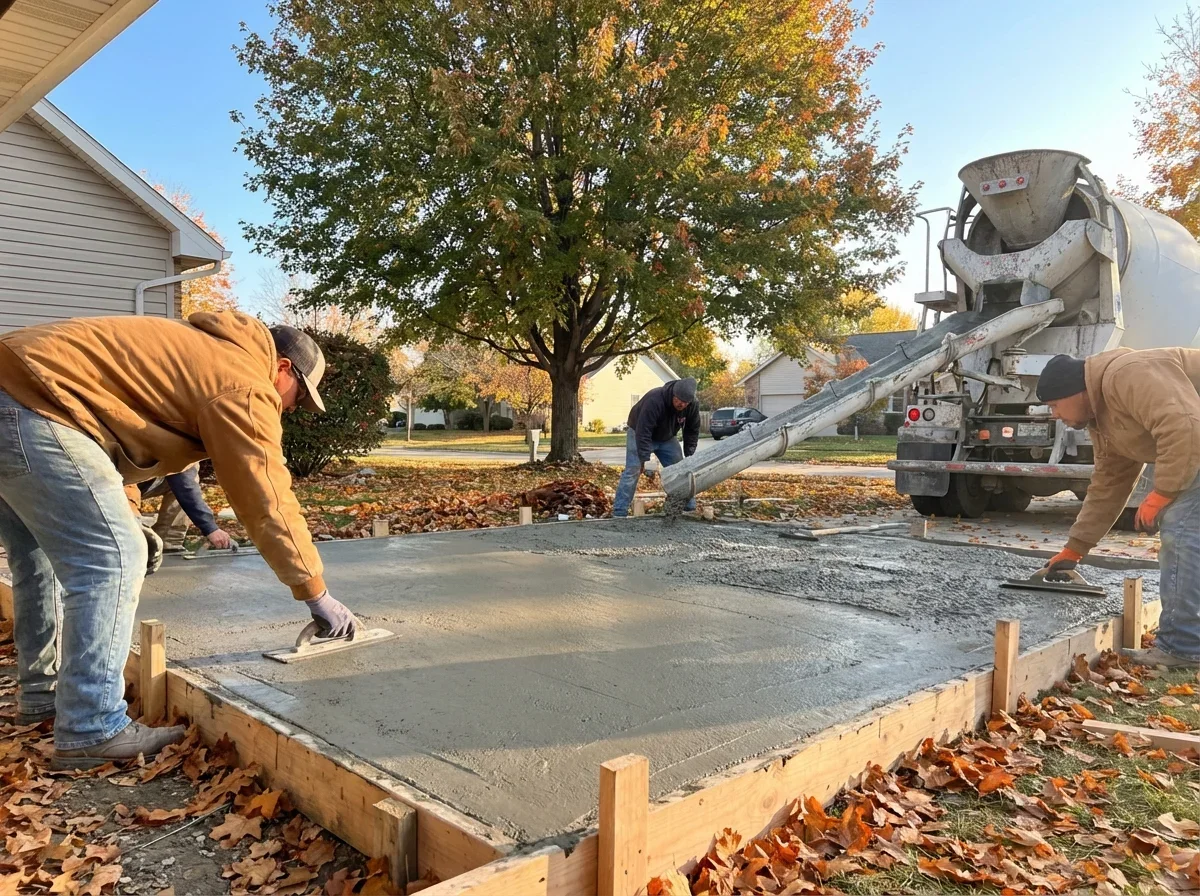
Concrete reaches most of its design strength within 28 days — but that timeline assumes average temperatures around 70°F. In cooler Wisconsin weather, curing takes longer. A slab poured in September might take 35-40 days to reach the same strength as one poured in July.
This matters for your project timeline. If you're pouring a driveway in October, don't plan on parking on it the same week you would for a July pour. Your contractor should give you realistic curing timelines based on the expected weather during those first critical weeks.
Planning Your Pour
Book early regardless of when you plan to pour. Summer fills up by April. Fall spots go quickly once word gets around that September is the best-kept secret in Wisconsin concrete work.
Get your project on the schedule 6-8 weeks ahead of when you want the work done. This gives your contractor time to pull permits, order materials, and prep the site — and gives you a buffer if weather forces a delay.
- Portland Cement Association. "Cold Weather Concreting." cement.org. Accessed February 8, 2026.
- University of Minnesota Extension. "Concrete Basics for Homeowners." extension.umn.edu. Accessed February 8, 2026.
- American Concrete Institute. "ACI 306R: Guide to Cold Weather Concreting." concrete.org. Accessed February 8, 2026.